How to keep your mini-split warranty valid in Florida: what voids coverage and what doesn't
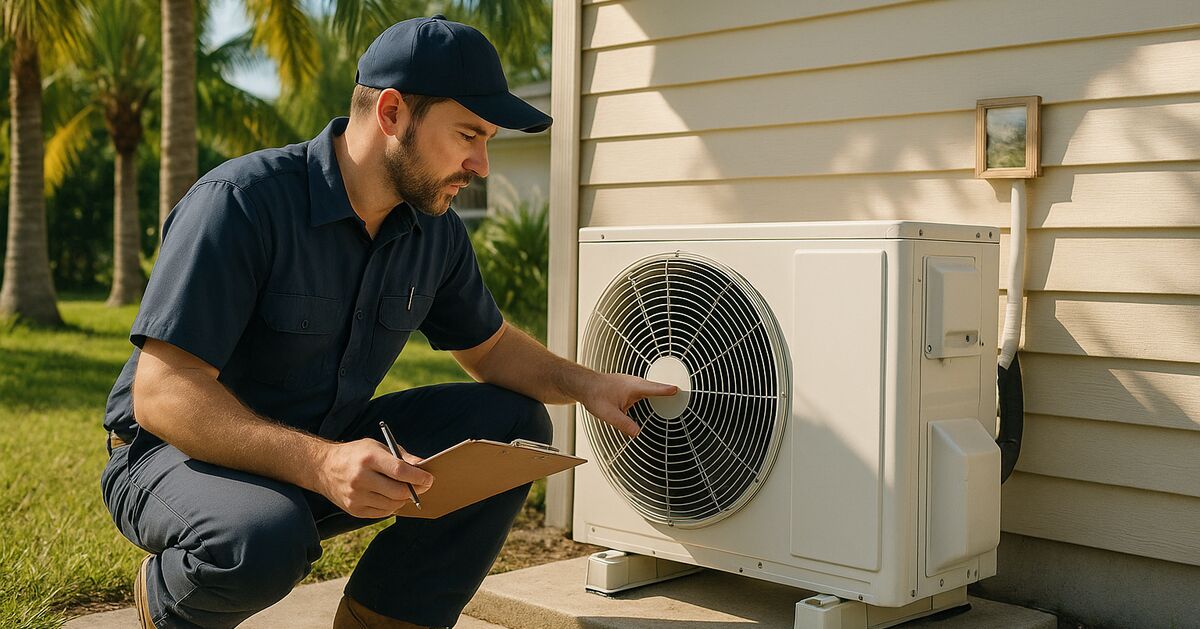
Your mini-split warranty is only as good as the habits you build around it, and in Florida's climate those habits matter more than almost anywhere else in the country.
Most homeowners assume the warranty is just a piece of paper locked in a drawer. Then, two years in, the compressor fails and the manufacturer denies the claim. The reason is almost always something the installer or the homeowner did, or didn't do, that nobody explained clearly at the time. This guide covers the real rules, the common myths, and the specific steps that keep your coverage intact from the day the unit goes in until the last year of the warranty period.
Why Florida is a harder environment for warranty compliance
Before getting into specific rules, it helps to understand why this topic matters more on the Gulf Coast than it does in, say, Ohio.
Salt air is the big one. Homeowners on Anna Maria Island, Casey Key, and the barrier communities near Venice and Osprey live within a few miles of open saltwater. Airborne salt accelerates corrosion on condenser fins, electrical contacts, and copper line sets. Most manufacturers know this and write their warranties accordingly. Some void corrosion-related claims automatically if the unit is installed within a certain distance of saltwater without a coil-guard coating or additional protective treatment. Read your specific warranty document for that distance, because it varies by brand.
High humidity, long run cycles, and the sheer number of hours a Florida mini-split works also stress components faster than in temperate climates. A system in Sarasota or Lakewood Ranch may run ten months out of twelve. That means maintenance intervals that feel optional up north become genuinely mandatory here.
The single biggest warranty killer: improper installation
Every major mini-split manufacturer, without exception, requires that installation be performed by a licensed HVAC contractor. That requirement is not a suggestion hidden in footnote twelve. It is usually listed near the top of the warranty terms, and manufacturers do check.
Here is what "improper installation" looks like in practice:
- A non-licensed handyman or DIY installer pulls the permit (or skips it entirely) and hooks up the line set
- The refrigerant charge is not verified with manifold gauges after installation
- The line set is too long for the unit's rated capacity without a refrigerant adjustment
- Electrical wiring does not match the manufacturer's specified voltage and breaker size
- The outdoor unit is mounted on an unstable surface or in a location with inadequate clearance
That last point connects to something worth reading in detail: our post on how to choose the best location for your mini-split indoor unit explains why placement decisions made on installation day affect both performance and long-term component life.
If a claim is filed and the manufacturer sends a technician or requests installation records, a missing permit is a red flag that triggers deeper scrutiny. We have covered the permit issue thoroughly in a separate post on why mini-split permits matter in Sarasota County, but the short version is this: a permit is not just a legal requirement. It is documentation that the installation was inspected and approved, which is exactly the paper trail that supports a warranty claim.
Equipment registration: the step most people forget
Nearly every brand requires you to register the equipment within a set window after installation, typically 30 to 90 days, to activate the full warranty period. If you skip registration, coverage usually defaults to a shorter "unregistered" term, which can be significantly less than the advertised warranty length.
Registration is almost always done online through the manufacturer's website. You'll need the model number, serial number, installation date, and the name of the installing contractor. Your technician should hand you this information at the end of installation day, but if they didn't, pull it from the paperwork or read it directly off the outdoor unit's data plate.
Set a calendar reminder for the registration deadline on the day your system goes in. It takes five minutes and the difference between a registered and unregistered warranty can be five or more years of coverage.
What maintenance is actually required
This is where Florida homeowners often run into trouble without realizing it. Most warranties include language that voids coverage if the unit was not maintained in accordance with the manufacturer's specifications. That language is enforceable.
The maintenance tasks that matter most for warranty compliance are:
- Filter cleaning. Indoor air handlers have washable filters that need to be rinsed every two to four weeks in a home that runs the system heavily. A clogged filter causes the evaporator coil to ice over, which strains the compressor. A compressor failure traced back to ice buildup from a dirty filter is a claim the manufacturer can and will deny.
- Coil cleaning. The outdoor condenser coil accumulates dirt, pollen, and in coastal areas, salt deposits. An annual cleaning by a technician keeps the coil transferring heat efficiently. Homeowners near Bayshore Gardens or the waterfront neighborhoods in Downtown Sarasota should consider doing this twice a year.
- Condensate drain maintenance. The indoor unit drains condensate through a line to the outside. In Florida's humidity, algae builds up in that drain line and causes blockages. A blocked drain overflows into the unit, which can damage the circuit board, and that is not a covered failure if the cause is clearly a maintenance issue.
- Keeping the outdoor unit clear. Overgrown landscaping that blocks airflow around the condenser is a common issue in established neighborhoods in Bradenton and along the tree-lined streets near Main Street at Lakewood Ranch. Manufacturers specify minimum clearance distances and restricted airflow that causes overheating is a warranty exclusion.
None of these tasks are complicated. The challenge is staying consistent when the system seems to be running fine.
What does NOT void your warranty (common myths)
Myth: Running the system continuously voids coverage. This is false. Mini-splits are designed for continuous operation and there is nothing in any standard residential warranty that penalizes run time. We addressed this in a previous post for homeowners who wondered about all-day operation. Running the system is exactly what it is made for.
Myth: Using a smart thermostat or third-party controller voids coverage. In most cases, no. Manufacturers sell their own Wi-Fi adapters and smart controllers, but connecting a compatible third-party device to the communication port does not void coverage unless the manufacturer explicitly lists it as an exclusion. Check your specific documentation.
Myth: Changing the remote control settings to a lower temperature damages the compressor. Modern inverter-driven compressors are not harmed by aggressive setpoints. The inverter modulates output, so the compressor does not short cycle when you set the temperature very low. This is a common misconception.
Myth: The warranty is void if you move to a new house. Most residential mini-split warranties are tied to the installation address, not the original purchaser. If you buy a home in Nokomis that already has a mini-split installed, the remaining warranty typically transfers with the property. Get the original installation and registration documents from the seller during closing.
Refrigerant issues and the warranty trap
Refrigerant loss is one of the trickier warranty topics. If your system is low on refrigerant, that is almost always the result of a leak, and a leak is a covered repair under most warranties. Simply topping off the refrigerant without finding and fixing the leak is not a repair, and if a technician does that repeatedly, manufacturers may argue that the underlying issue was never properly addressed.
The right process is to locate the leak, repair it, pressure-test the system, and then recharge to the correct specification. Our detailed post on mini-split refrigerant recharge vs. a real repair explains exactly why a "top off" should never be the end of the conversation with your technician.
Using a refrigerant type other than what is specified on the unit's data plate also voids coverage immediately. This sounds obvious, but it can happen when a technician uses a "drop-in substitute" without disclosure. Always confirm the refrigerant type before any service work.
Third-party parts and repairs
Using non-OEM (original equipment manufacturer) parts during a repair is a common warranty exclusion. If a circuit board, fan motor, or sensor is replaced with an aftermarket substitute that later causes a secondary failure, the manufacturer can deny the claim.
This does not mean you must use the manufacturer's own service network for every repair. It means the parts used need to meet the manufacturer's specifications. A reputable HVAC contractor will source parts that comply with those requirements and document it properly.
Keeping records: the habit that pays off
Every service visit, filter cleaning, and coil inspection should be logged. Keep a simple folder, physical or digital, with:
- Original purchase receipt and installation invoice
- Warranty registration confirmation
- Permit and inspection approval from the county
- Dates and technician names for every service call
- Any parts replaced, with part numbers if available
If you ever need to file a warranty claim, this documentation is what separates a smooth approval from a drawn-out dispute. Manufacturers are businesses. They look for reasons to deny a claim if the paperwork trail is thin. Your records are your defense.
What to do when you buy a home with an existing mini-split
This situation comes up frequently in areas like Downtown Venice, Osprey, and the established neighborhoods around Bradenton where mini-splits have been installed for several years. If the system was installed correctly and registered, some warranty time may remain.
Ask the seller for all documentation listed above. If records are incomplete, have a licensed technician inspect the unit and document its current condition before closing. Our team serves all of these communities and can produce a written condition report that gives you a clear picture of what you are inheriting.
If the system was never permitted, the warranty is almost certainly void regardless of age, which affects the home's value and your future repair costs.
Choosing a system with a realistic warranty in the first place
Not all warranty terms are equal. Some brands advertise long warranty periods but attach so many compliance conditions that claims are routinely denied. Others offer shorter but more straightforward coverage. When you are comparing systems, the warranty terms deserve the same attention as the price or the SEER2 rating.
Our guide on how to compare mini-split brands walks through what to look for beyond the marketing materials, including how to read warranty documents before you buy rather than after something goes wrong.
Similarly, choosing the right SEER2 rating for your Florida mini-split is a related decision that affects long-term operating costs, and higher-efficiency systems often come with more favorable warranty terms because the manufacturer is confident in the engineering.
The short version
Keep your warranty valid by doing four things consistently:
- Have the system installed by a licensed contractor who pulls the permit
- Register the equipment within the required window after installation
- Maintain the filters, coils, and drain on the schedule the manufacturer specifies
- Document every service visit and keep those records for the life of the system
Florida's climate is hard on mechanical equipment. A mini-split that is properly installed and maintained can last well past its warranty period. One that is neglected or installed carelessly may fail before the warranty even expires, and then fail again to provide coverage when it does.
If you have questions about whether your current system is in warranty compliance, or if you are planning a new installation and want to get everything right from the start, get in touch with our team. We cover Sarasota, Bradenton, Lakewood Ranch, Venice, Osprey, Nokomis, and all surrounding communities, and we are happy to walk through the specifics of your situation without any pressure.