How to compare mini-split brands: what Sarasota homeowners should look for beyond the price tag
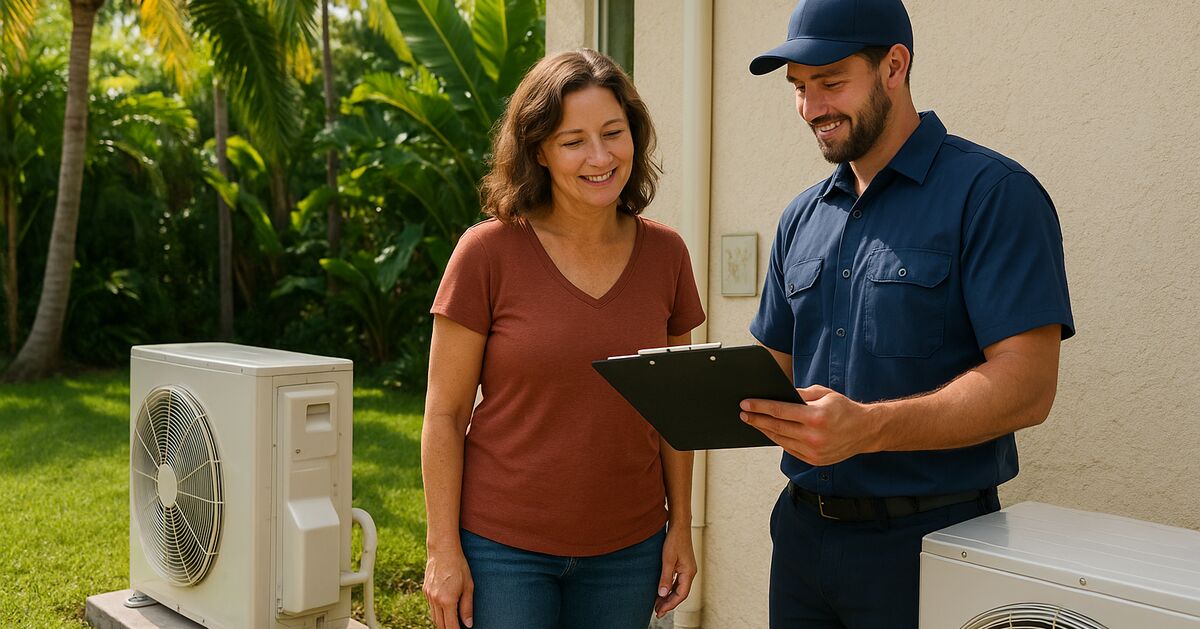
Florida's Gulf Coast heat is a serious stress test for any cooling system, and a mini-split you install this year could still be running in 2040. That makes picking the right brand one of the most consequential decisions you'll make for your home - yet most homeowners only compare the number on the price tag. The difference between a well-matched system and the wrong one often shows up not at purchase time, but two summers later when the unit struggles through a heatwave or a warranty claim goes nowhere.
This guide walks through every factor that actually matters when you're comparing mini-split brands in Sarasota, Bradenton, Lakewood Ranch, Venice, and the surrounding communities. Price is part of the picture - but it's a small part.
Why brand choice matters more in coastal Florida than almost anywhere else
Salt air accelerates corrosion. High humidity runs year-round. Cooling loads stretch from April to November. These conditions push a mini-split harder than the moderate climates most national marketing materials are written for. A unit rated for Phoenix or Atlanta may behave very differently at a beachfront property on Anna Maria Island or a canal-side home in Osprey.
Manufacturers who engineer specifically for tropical and coastal conditions apply protective coatings to condenser coils, use corrosion-resistant fasteners, and rate their equipment for sustained high-ambient performance. Those details rarely appear in a quick comparison chart, but they show up in how long the system lasts and how efficiently it runs five years from now. If you want to understand the lifespan question in more depth, our post on how long a mini-split lasts in Florida's climate covers what the research and field experience actually show.
SEER2 ratings: what they tell you and what they don't
Efficiency ratings get a lot of attention, and they should - electricity isn't cheap, and you'll be running this system constantly. But comparing SEER2 numbers across brands without context is like comparing two cars only by their highway MPG sticker.
A few things to watch for:
- Rated vs. real-world efficiency. A unit with a very high SEER2 rating achieved that number under lab conditions. Ask your installer how the brand's equipment performs in high-ambient temperatures (above 95°F is common here in July and August). Some brands maintain efficiency well; others drop off sharply.
- HSPF2 matters too. Heating Seasonal Performance Factor rates heating efficiency, and even in Sarasota you'll use heat mode on cool January mornings. A brand that skimps on heat pump performance isn't a great fit for year-round use.
- Variable-speed compressors. Every reputable brand now offers inverter-driven, variable-speed compressors, but not at every price point within their lineup. Make sure you're comparing inverter models to inverter models, not a budget fixed-speed unit to a premium variable-speed one.
We've already done a deep dive on choosing the right SEER2 rating for your Florida mini-split if you want to go further into the efficiency topic on its own.
Warranty terms: read past the headline number
"Ten-year warranty" sounds great. The fine print often tells a different story.
Parts vs. compressor vs. labor. Most brands offer separate warranty periods for different components. A common structure is five years on parts, ten years on the compressor - but that ten-year compressor warranty often requires registration within 30 to 60 days of installation, and it may require that a licensed contractor installed the unit. Miss either of those conditions and you may default to a shorter baseline warranty.
Labor is rarely covered. Parts warranties do not pay for the labor to install a replacement part. On a system that requires a refrigerant recovery, a coil swap, or a control board replacement, labor can easily match or exceed the cost of the part itself. Some brands partner with extended-warranty providers; others leave you entirely on your own.
Local service network. A warranty is only as good as the technician who can honor it. Ask whether the brand you're considering has authorized service providers in Sarasota County and Manatee County. A brand that's popular in the Northeast or Midwest may have a thin service network on the Gulf Coast, meaning even a valid warranty claim takes weeks to resolve because parts have to be shipped in.
Registration requirements. Set a calendar reminder the day your system is installed. Missing a registration window is an easy mistake that can cut your parts warranty in half.
Build quality indicators worth asking about
You shouldn't have to be an engineer to evaluate build quality, but a few specific questions will quickly separate brands that cut corners from those that don't.
Coil coating and corrosion protection. The outdoor condenser sits outside year-round in salt-laden Gulf Coast air. Blue-fin or gold-fin anti-corrosion coating on the heat exchanger fins is a real, meaningful feature. Ask your installer which brands use it as standard, not as an upgrade.
Drain pan and condensate management. Mini-splits in Florida produce a lot of condensate because we pull so much humidity out of the air. A poorly designed drain pan or a condensate pump that isn't up to the task causes water damage, mold, and callbacks. Quality brands design drainage thoughtfully; budget units often don't.
Noise levels. Indoor air handler noise is measured in decibels and listed in product specs. In a bedroom in a quiet neighborhood like those around Main Street at Lakewood Ranch or the residential streets of Downtown Venice, even a few decibels of difference is noticeable at night. Look for units rated below 30 dB for the indoor head at low fan speed.
Control board quality and software. Mini-splits are increasingly software-driven. Brands that invest in reliable control boards and offer stable Wi-Fi connectivity (without requiring a third-party bridge) tend to have fewer nuisance errors and easier firmware updates. If a brand has a history of control board failures, your local installer will know about it from field experience.
What your installer's opinion is actually worth
Installers see what happens to equipment after the sale. They see which brands produce callbacks, which ones corrode quickly in salt-air zones like Casey Key or Bayshore Gardens, and which ones have control boards that fail in year three. That field knowledge is genuinely valuable and is something no online review can replicate.
That said, installer preference isn't always neutral. Ask your installer whether they're a preferred dealer or certified installer for any particular brand - that relationship can create incentives. The best installers will tell you honestly, offer you two or three options at different price points, and explain the trade-offs rather than just steering you toward the product with the highest margin for them.
At Sarasota Mini Splits, we carry and install several brands precisely so we can match a homeowner's needs to the right product rather than fitting every job to one line.
The brands most commonly installed on Florida's Gulf Coast
Without making specific rankings (installation quality, system sizing, and site conditions all affect outcomes as much as brand), the brands that consistently appear in professional Gulf Coast installations include Mitsubishi, Daikin, Fujitsu, LG, and Bosch. Each has genuine strengths:
- Mitsubishi is widely regarded as the benchmark for quiet operation, build quality, and cold-climate heating - though "cold climate" matters less here than the quality of their tropical-climate engineering and their strong service network.
- Daikin manufactures most of its own components and has a strong track record for coil durability in humid environments.
- Fujitsu offers competitive efficiency and is well-regarded for their slim-duct and ceiling cassette options, which suits older Florida homes without attic ductwork.
- LG has improved reliability substantially over the past decade and offers competitive pricing at the mid-tier.
- Bosch (using Thermia/IVT-derived technology) has gained traction with homeowners focused on European build standards.
Budget-tier brands sold primarily through big-box stores or online-only channels are not necessarily bad, but they almost uniformly have thinner service networks, weaker corrosion protection, and shorter effective lifespans in coastal conditions. The upfront savings can disappear quickly if the unit needs service after year two.
Sizing and placement: mistakes that brand selection can't fix
Even the best brand will underperform if the system is sized or placed incorrectly. An oversized unit short-cycles, meaning it never runs long enough to properly dehumidify - a serious problem in a climate where humidity is the real discomfort driver. An undersized unit runs continuously and struggles on the hottest days.
Placement of the indoor air handler affects both comfort and efficiency in ways that matter as much as brand choice. If you haven't already, take a look at our guide on how to choose the best location for your mini-split indoor unit before finalizing your installation plan.
Comparing total cost of ownership, not just purchase price
A mini-split that costs $400 more upfront but uses 15% less electricity will pay back that difference in a few years - and then keep paying you back for the remaining decade or more of its life. Run the numbers with your installer. If they can't or won't do that calculation with you, that's useful information too.
The factors that go into total cost of ownership include:
- Purchase price of the equipment
- Installation cost (which varies by job complexity - see our breakdown of mini-split installation costs in Florida)
- Average monthly electricity consumption at your home's load
- Expected maintenance costs (filter cleaning, annual service, coil cleaning)
- Likely repair costs based on brand reliability data and service network depth
- Expected useful lifespan before replacement
When you frame it this way, a mid-tier brand with excellent service support and strong corrosion resistance often looks better than either extreme - a stripped-down budget unit or a flagship premium model with features you don't need.
Questions to ask before you commit to any brand
Walk into any consultation with these questions ready:
- Does this brand's condenser have anti-corrosion coil coating as standard on this model?
- What is the warranty structure - parts, compressor, and labor - and what are the registration requirements?
- Do you have authorized service providers for this brand in Sarasota and Manatee counties?
- How does this unit perform when outdoor temperatures are above 95°F?
- What's the indoor sound level at low fan speed?
- Has this brand or model given you callbacks or reliability concerns in your local installs?
If your installer gives you confident, specific answers, you're working with someone who knows their product. If the answers are vague, keep asking.
Where to go from here
Comparing brands well requires a combination of your own research and a candid conversation with an installer who works in your specific area. Conditions in Nokomis are different from conditions in Downtown Sarasota, and conditions on the water in Anna Maria Island are different from an inland home in Lakewood Ranch - salt load, sun exposure, and humidity patterns all vary.
Our team serves communities across the region, from Sarasota and Bradenton to Venice, Osprey, Nokomis, and Lakewood Ranch. We're happy to walk through brand options with you based on your specific home, your budget, and the conditions at your address - not a generic recommendation that ignores where you actually live.
If you have questions before scheduling anything, our FAQ page covers many of the most common ones, and you're always welcome to reach out directly for a straightforward conversation.
The right brand is out there for your home. The goal of this guide is simply to make sure you find it for the right reasons.