How long does a mini-split last in Florida's climate?
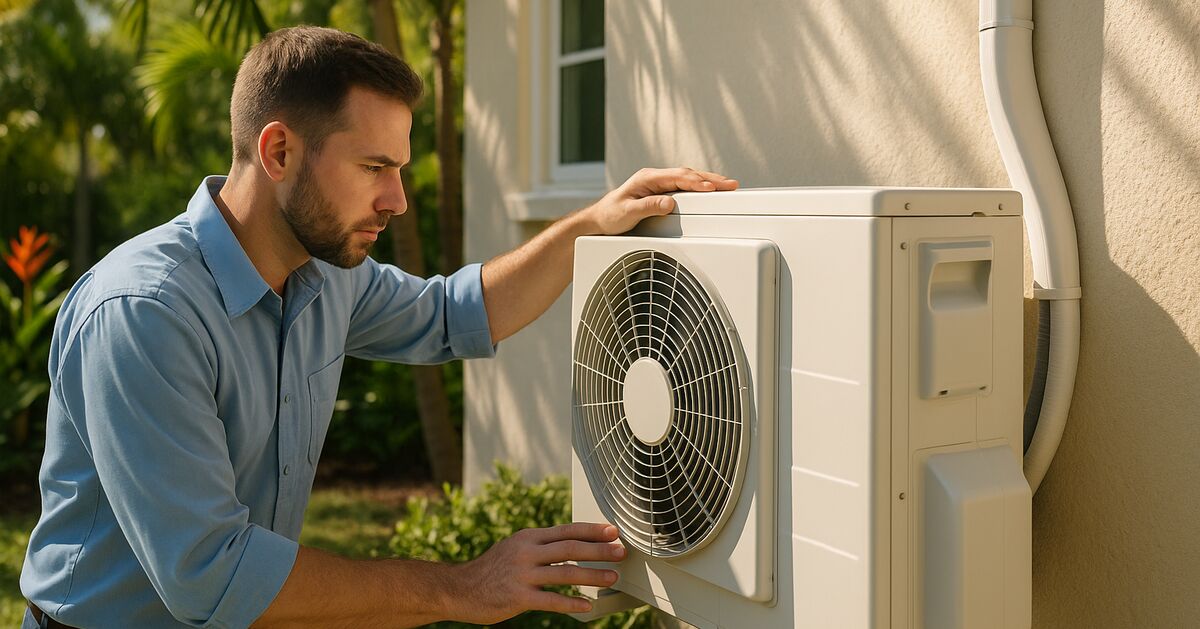
Florida will age a mini-split faster than almost any other climate in the country. That is not a reason to avoid ductless systems - it is a reason to understand them. Homeowners across Sarasota, Bradenton, Lakewood Ranch, Venice, and the barrier islands ask us the same question almost every week: "How long will this thing actually last?" The honest answer is somewhere between 12 and 20 years, but that range is wide on purpose. Where your system lands on that spectrum depends almost entirely on factors you can control.
Why Florida is harder on mini-splits than most places
A mini-split installed in, say, Minnesota runs for maybe five or six months of heavy cooling and then sits dormant most of the winter. A system installed in Sarasota or on Anna Maria Island runs for cooling roughly ten months of the year, and then kicks into heating mode during the occasional cold snap in January and February. That is a dramatically higher number of operating hours per year.
On top of the run time, coastal salt air is genuinely corrosive. If your outdoor condenser unit sits within a mile of the Gulf - which describes a huge portion of our service area, from Casey Key to Bayshore Gardens - salt particles settle on the coil fins, the cabinet, and the copper line set connections. Over time, salt accelerates oxidation and degrades the aluminum fins that allow the condenser to shed heat efficiently. A condenser that cannot shed heat efficiently works harder, runs hotter, and wears out sooner.
Humidity compounds the problem indoors. High indoor humidity encourages mold and biofilm growth inside the air handler, on the blower wheel, and along the drain pan. A clogged drain pan can overflow and damage walls, ceilings, and the unit itself. A dirty blower wheel can reduce airflow enough that the evaporator coil freezes - which is hard on the compressor every time it happens.
None of these are reasons to panic. They are reasons to take maintenance seriously.
Realistic lifespan expectations by location
Think of your location in three rough tiers:
Inland neighborhoods - areas like Main Street at Lakewood Ranch, inland Bradenton, or neighborhoods well away from the coast - tend to see the least salt exposure. With good annual maintenance, a quality mini-split here can comfortably reach 18 to 20 years.
Mid-distance coastal - Downtown Sarasota, Downtown Venice, Osprey, Nokomis, and similar neighborhoods that are near the water but not right on it - typically see systems last 15 to 18 years with consistent care. Salt is present but not overwhelming.
Direct waterfront and barrier islands - Homes on Casey Key, Anna Maria Island, or anywhere with direct Gulf or bay exposure are in the toughest environment. Well-maintained systems here often hit 12 to 15 years. Skipping maintenance can cut that meaningfully shorter.
These are not guarantees, but they reflect what we actually see in the field across our service areas throughout Sarasota and Manatee counties.
The components most likely to fail first
Mini-splits are not one single part. They are a system, and different parts have different failure rates in our climate.
The compressor is the most expensive component and usually the one homeowners worry about most. In Florida, the compressor is stressed by high ambient temperatures (a condenser sitting in full sun on a hot August afternoon can see ambient air temperatures above 100°F before it even starts working). Undersized systems that run non-stop are at highest risk. If you have questions about whether your current system is matched correctly to your space, our post on mini-split sizing for Sarasota homeowners goes into detail on how to think through that.
The fan motors - both the indoor blower and the outdoor condenser fan - accumulate wear in any system that runs heavily. Bearings can fail, and capacitors (which help the motors start) are a common service item after five to eight years.
The circuit boards take a beating from our frequent lightning storms. A nearby strike can send a surge through the low-voltage wiring that connects the indoor and outdoor units. A quality surge protector on the disconnect is cheap insurance.
The refrigerant line connections can develop very slow leaks over years of thermal expansion and contraction. Low refrigerant is not a normal consumable, so if a technician tells you the system needs a refrigerant "top-off" every year, that is a sign of a leak that should be located and repaired - not just topped off repeatedly.
The drain line is almost always the first thing to cause a service call. It clogs with algae and debris, especially during humid summer months. Clearing it is a simple maintenance task, but an ignored clog can cause water damage and mold.
What you can do to add years to your system
The single biggest lever is keeping the filters and coils clean. The indoor air handler filter should be rinsed (not just dusted) every three to four weeks during heavy cooling season. A filter clogged with dust and pet hair restricts airflow across the evaporator coil. Restricted airflow means the coil runs colder than it should, which stresses the refrigerant circuit and - in bad cases - leads to icing.
For the outdoor condenser, keep at least 18 to 24 inches of clearance on all sides. Florida landscaping grows fast, and it is easy for shrubs to creep up and choke off airflow. Rinse the condenser coil fins gently with a garden hose once or twice a year. Never use a pressure washer - the fins are delicate aluminum and pressure will bend them flat, reducing efficiency significantly.
Salt-specific care matters most for beachfront homes. After particularly stormy or windy periods, a gentle freshwater rinse of the outdoor unit removes salt deposits before they have time to oxidize. Some manufacturers also offer "salt-resistant" coil coatings, and there are aftermarket coating products a technician can apply during a maintenance visit.
Have the condensate drain line flushed and treated with a diluted bleach or condensate treatment tablet at least once a year, ideally at the start of the cooling season. This is usually included in a professional maintenance visit.
Our seasonal mini-split maintenance checklist for Sarasota's salt-air climate walks through every task month by month if you want a complete reference.
Professional maintenance: what it includes and why it matters
A homeowner can do a lot with a clean rag, a garden hose, and a replacement filter. But an annual professional tune-up catches things that are impossible to check without gauges and training. A technician will:
- Check refrigerant pressure and look for signs of a slow leak
- Inspect electrical connections and test capacitors
- Measure the temperature split across the evaporator coil to verify the system is performing correctly
- Clean the blower wheel (which requires removing the indoor unit's front panel and often the blower assembly itself)
- Flush and treat the condensate drain
- Inspect the line set insulation for cracking and UV degradation
- Check the outdoor unit's coil and cabinet for corrosion
Catching a failing capacitor during a maintenance visit costs a fraction of what an emergency service call costs when the unit stops working on a Saturday in August. Our team handles ductless mini-split installation and service across Sarasota, as well as Bradenton, Lakewood Ranch, Venice, Osprey, and Nokomis - so we see all the ways Florida's climate interacts with these systems over time.
When to repair vs. replace an aging system
This is the question nobody likes asking but everyone eventually faces. A few guidelines that hold up well in practice:
If the system is under eight years old, almost any repair is worth doing unless the compressor has failed. A compressor replacement on a system under warranty may still make financial sense - check your documentation carefully.
If the system is between eight and twelve years old, get a repair estimate and compare it against a replacement quote. A repair costing more than 40 to 50 percent of a new system's installed price is usually a signal to replace.
If the system is over twelve years old, has already had one significant repair, and is now showing another problem, replacement is almost always the better financial decision - especially because modern systems are meaningfully more efficient than systems from a decade ago. A new system will reduce your monthly electricity bill, which helps offset the replacement cost over time.
Also factor in refrigerant type. Older systems using R-22 refrigerant are effectively obsolete. R-22 is no longer manufactured in the US, and what remains on the market is expensive. If your system uses R-22, replacement is the responsible long-term choice regardless of its age.
If you have questions about specific situations, our FAQ page covers many of the most common repair-versus-replace scenarios.
A note on installation quality and long-term lifespan
Here is something that does not get said enough: the lifespan of a mini-split is heavily determined on the day it is installed. A system that is installed with a proper vacuum pull on the refrigerant lines (to remove moisture and non-condensables), correctly sized copper line sets, weatherproofed line set penetrations through the wall, and a securely leveled and elevated outdoor unit is going to outperform a hastily installed system by years - even if both units are the same brand and model.
Elevation matters more than many people realize. An outdoor condenser sitting directly on a concrete slab with no standoffs can end up partially submerged during heavy rain events. Elevated brackets keep the unit above standing water and allow airflow under the unit.
Line set insulation that is exposed to Florida's UV is going to degrade within a few years. Quality installations use UV-resistant foam or protect the insulation with a conduit wrap. Degraded insulation on the suction line causes condensation to drip, leads to energy loss, and can eventually allow moisture into the line set connection.
If you are curious about what a proper installation process looks like from start to finish, our post on what to expect on mini-split installation day covers the full process in plain language.
The bottom line
A quality mini-split, professionally installed and consistently maintained, will give most Florida homeowners well over a decade of reliable service - often closer to 15 to 18 years in a typical Sarasota or Bradenton neighborhood. The difference between a system that lasts 12 years and one that lasts 20 comes down to how the unit is installed, how consistently it is maintained, and how quickly small problems are addressed before they become large ones.
If you have questions about your current system's condition, or you are weighing repair against replacement, reach out to us and we will give you a straight answer.