Seasonal mini-split maintenance checklist for Sarasota's salt-air climate
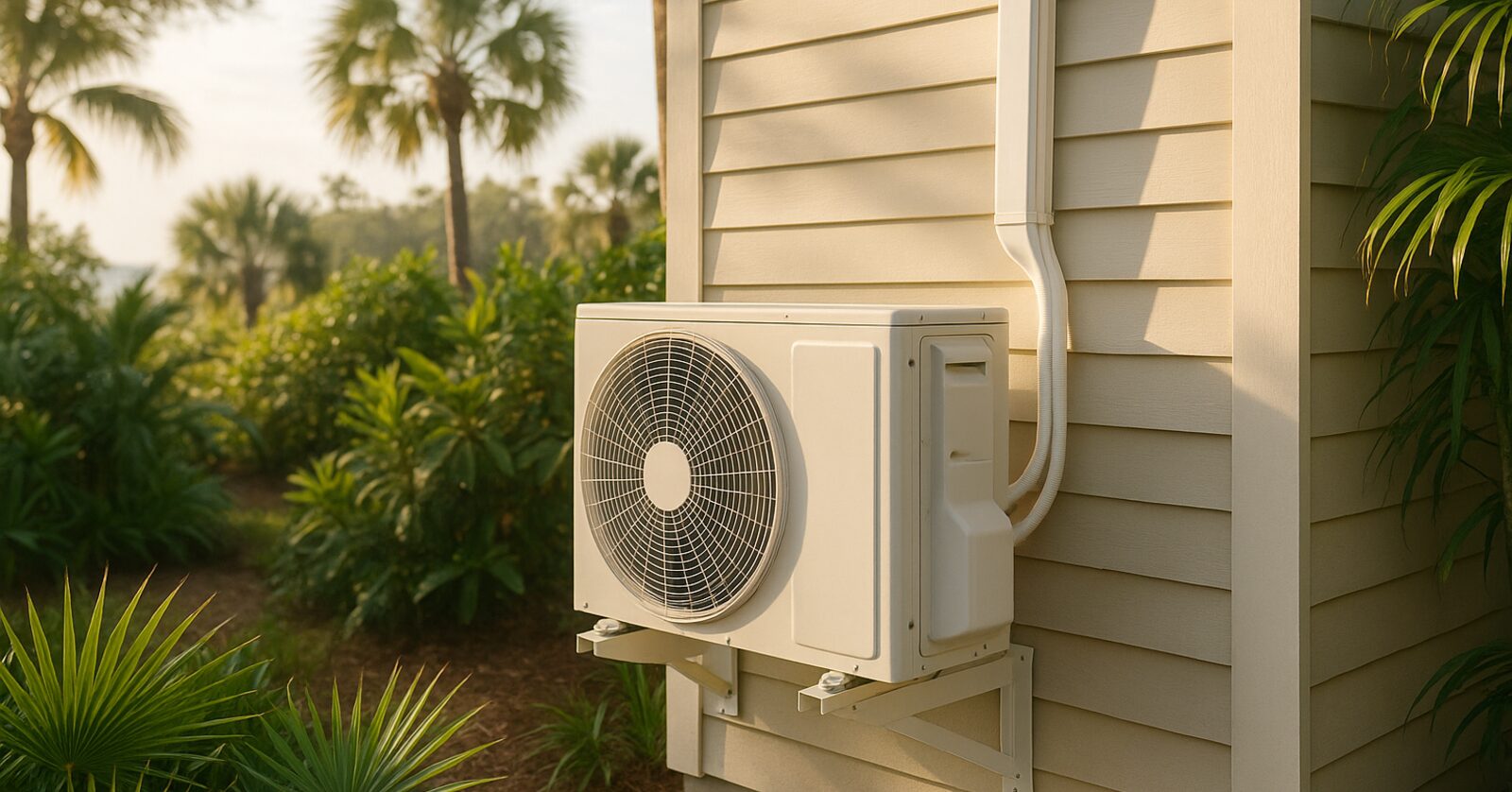
Salt air eats things alive on the Gulf Coast, and your mini-split is not immune. Homeowners in Sarasota, Venice, Anna Maria Island, and Casey Key are running their systems twelve months a year in an atmosphere that corrodes metal, clogs coils, and breeds mold far faster than anywhere inland. A maintenance routine that works fine in Atlanta or Phoenix will leave you with a surprise breakdown in the middle of August here.
This checklist is built specifically for this climate. Work through it once a season and your system will reward you with lower electric bills, fewer repair calls, and a longer useful life. Skip it and you will feel it, usually at the worst possible time.
Why salt air changes everything
Within a mile or two of the Gulf or any bay, airborne salt particles land on every outdoor surface, including the aluminum fins and copper lines of your mini-split's condenser unit. Salt is hygroscopic, meaning it holds moisture against metal, and it speeds up galvanic corrosion dramatically. The result is "white rust" on aluminum fins and pitting on copper and steel components.
Even if you live several miles inland, say in Lakewood Ranch or Bayshore Gardens, afternoon sea breezes still carry enough salt aerosol to be meaningful over years of exposure. Add Florida's famously high humidity and you have a coil that stays damp for long stretches, which is perfect for mold, algae, and biofilm buildup inside the air handler.
The good news is that mini-splits are designed to be serviced. The filters, coils, and drain lines are all accessible. What matters is doing it on a schedule that matches the actual stresses your system faces here. If you want a deeper look at how humidity specifically affects performance, our post on why your mini-split isn't killing Gulf Coast humidity (and how to fix it) covers the mechanics in detail.
Spring checklist (March - May): reset before the heat arrives
Spring is your most important maintenance window. You want the system clean and fully tested before the long cooling season kicks off in late May.
Indoor air handler
- Remove and rinse the filters. Most mini-split filters slide out without tools. Rinse them under lukewarm water, let them dry fully in the shade, and reinstall. Never use hot water or a brush, as these distort the mesh. If the filters look gray or matted after rinsing, replace them.
- Inspect the blower wheel for dust buildup. A thick coat of dust on the blower wheel unbalances it, reduces airflow, and makes the motor work harder. If you see visible buildup, a soft-bristle brush and a coil cleaner foam spray work well. If you are not comfortable opening the unit, this is a good item to hand off to a technician.
- Clean the evaporator coil lightly. Spray a no-rinse evaporator coil cleaner onto the fins and let it drip into the drain pan. This dissolves light biofilm before it builds into a blockage.
- Flush the condensate drain. Pour a small amount of diluted white vinegar or a condensate drain treatment tablet into the drain pan. This kills algae that would otherwise form a plug by July. A clogged drain is one of the most common service calls we see every summer.
- Wipe down the unit's plastic housing with a mild cleaner. Mold spores love textured plastic surfaces.
Outdoor condenser
- Rinse the condenser coil with a garden hose set to a gentle shower (never a pressure washer). Spray from the inside out if you can reach the top grille, or from outside in. The goal is to flush salt, pollen, and debris from between the fins without bending them.
- Inspect the fins for corrosion. White, chalky discoloration or dark pitting means salt damage is accumulating. A fin comb can straighten bent fins, but actual corrosion may need a protective coil coating applied by a technician.
- Check that the unit is level. Ground-mounted condensers can settle over time, and a tilted unit stresses the refrigerant lines and may cause oil pooling in the compressor.
- Clear vegetation. Trim any shrubs, vines, or grass that have grown within 18 inches of the unit over the winter. Restricted airflow makes the condenser work harder and raises your electric bill.
- Inspect the refrigerant line set covers. Plastic line-set covers crack in UV exposure. Cracked covers let moisture and insects into the insulation.
Summer checklist (June - August): mid-season checks during peak load
Your system runs almost continuously from June through August. You are not doing a deep clean now, but you are watching for early warning signs.
- Check filters every 3-4 weeks. In high-humidity months, filters clog faster because they capture more airborne particulate that sticks to damp mesh. A clogged filter drops airflow, which drops the evaporator coil temperature, which can cause the coil to freeze. If you notice reduced airflow or ice forming, check the filter first.
- Listen for new sounds. A rattling condenser often means a screw has vibrated loose. A gurgling noise from the air handler almost always means a partially blocked drain line. A high-pitched squeal at startup may indicate a failing fan motor bearing. None of these get better on their own.
- Watch your electric bill. A sudden increase with no change in usage habits often points to a refrigerant issue or a dirty coil reducing efficiency. Our mini-split services page covers what a full diagnostic inspection involves if you want to schedule a mid-season check.
- Make sure outdoor drainage is clear. Afternoon thunderstorms in Sarasota can drop two inches of rain in an hour. Debris washed against the condenser unit can block airflow quickly.
Fall checklist (September - November): post-storm recovery and deep clean
Hurricane season officially ends November 30, and the weeks that follow are ideal for a thorough post-season inspection.
After any named storm or major rain event:
- Inspect the outdoor unit for debris impact. Branches and windblown material can dent condenser fins or damage the fan grille. Bent fins are fixable; a cracked cabinet or damaged fan blade needs a technician.
- Check that the condenser base hasn't shifted. Storm surge or heavy runoff can erode the pad under a ground-mounted unit.
- Look at the line-set penetration through the wall. A gap there is an entry point for water intrusion and insects. Seal any new openings with weatherproof foam.
Routine fall service:
- Do a full repeat of the spring filter and coil cleaning steps. The summer has deposited a full season's worth of dust, pollen, mold spores, and salt.
- Inspect the condensate drain pan for staining or standing water. Staining without standing water means the drain is working but mold is growing at the pan edges. A thorough cleaning and a drain treatment will address this before the less-humid winter slows evaporation naturally.
- Test heating mode. Our Gulf Coast winters are mild, but cold fronts do come through. October is a good time to confirm your system heats properly before you actually need it. For a full explanation of how heat-pump heating works on a January morning here, see our post on how a ductless heat pump warms your Sarasota home on a cold January morning.
Winter checklist (December - February): low-maintenance season with a few important tasks
This is your quietest stretch, but a couple of items matter.
- Clean filters once a month. The system may not run cooling cycles as often, but if you are using heating mode during cold fronts, the filter still loads up.
- Run the system's self-cleaning or dry mode if it has one. Many modern mini-splits have a mode that heats the evaporator coil slightly after a cooling cycle to evaporate residual moisture. Running this mode through the winter prevents mold from establishing itself during the months when the system sits mostly idle.
- Visually inspect the condenser. Winter storms are rarer but not unheard of in Southwest Florida. A quick walk-around takes two minutes and can catch something obvious like a bird's nest in the fan grille or a vine that started growing over the past few weeks.
- Look at your refrigerant lines. The foam insulation on refrigerant lines degrades in UV light over the years. If you see crumbling or missing insulation, plan to have it replaced before the next cooling season. Bare lines sweat condensation, which drips onto the wall and can cause mold and water damage indoors.
What you should leave to a professional
Some tasks in a proper annual service go beyond a homeowner's safe reach.
- Refrigerant level check. Refrigerant work requires EPA certification. If your system is not cooling as well as it used to, low refrigerant is a possible cause, but the only way to know is with gauges. More importantly, a refrigerant shortage almost always points to a leak somewhere in the system. Adding refrigerant without finding and fixing the leak is a temporary fix that doesn't address the root problem.
- Electrical connection inspection. Vibration over years of operation can loosen terminal screws in the disconnect box and at the unit itself. Loose connections arc, and arcing connections can damage control boards, which are expensive.
- Coil coating. If your condenser fins show meaningful corrosion from salt exposure, a technician can apply a protective coating (often called a "sacrificial coating" or "coil guard") that significantly slows future damage. This is especially worthwhile for homes on Anna Maria Island, Casey Key, or anywhere within a short walk of the water.
- Full drain system inspection. A technician with a camera or pressure test can confirm the condensate drain line is clear all the way to its termination point outside the house, not just at the pan.
If you're overdue for a professional visit or just moved into a home and don't know when the system was last serviced, the simplest step is to request a free quote and inspection so you know exactly what you're working with.
Sizing, zoning, and the bigger picture
Maintenance can only do so much for a system that isn't right for the space it serves. An undersized unit runs continuously without ever hitting the setpoint temperature, which accelerates wear and wastes electricity. An oversized unit short-cycles, which means it never runs long enough to properly dehumidify, which in Gulf Coast humidity creates exactly the damp, clammy feeling everyone hates. If you suspect sizing is an issue, our guide on whether your mini-split is the right size for your Sarasota home walks through how to evaluate it.
Similarly, if you are adding zones or considering a system upgrade, our comparison of single-zone vs. multi-zone ductless systems will help you think through the options before you spend any money.
A quick note on service areas
We cover the full stretch from Bradenton and Anna Maria Island south through Sarasota, Venice, Osprey, and Nokomis. If you are in any of these communities and haven't had a professional service in the past year, this season's checklist is a good place to start. You can also browse our full list of service areas if you're not sure whether we cover your neighborhood.
A maintenance schedule at a glance
- Monthly: Rinse or inspect filters; visual check of condenser clearance
- Spring (March - May): Full filter clean, evaporator coil clean, drain flush, condenser rinse, vegetation trim, line-set cover inspection
- Summer (June - August): Filter check every 3-4 weeks, listen for new noises, monitor electricity use
- Fall (September - November): Post-storm inspection, repeat of spring cleaning steps, drain pan check, heating mode test
- Annual (any season): Professional refrigerant check, electrical inspection, coil coating assessment, full drain line inspection
A mini-split that gets this kind of attention in Sarasota's climate will outperform and outlast one that doesn't, sometimes by years. The salt air, the humidity, and the year-round heat are not going anywhere. A little routine care is the simplest investment you can make in the system that keeps your home comfortable through all of it.