Why your mini-split isn't killing Gulf Coast humidity (and how to fix it)
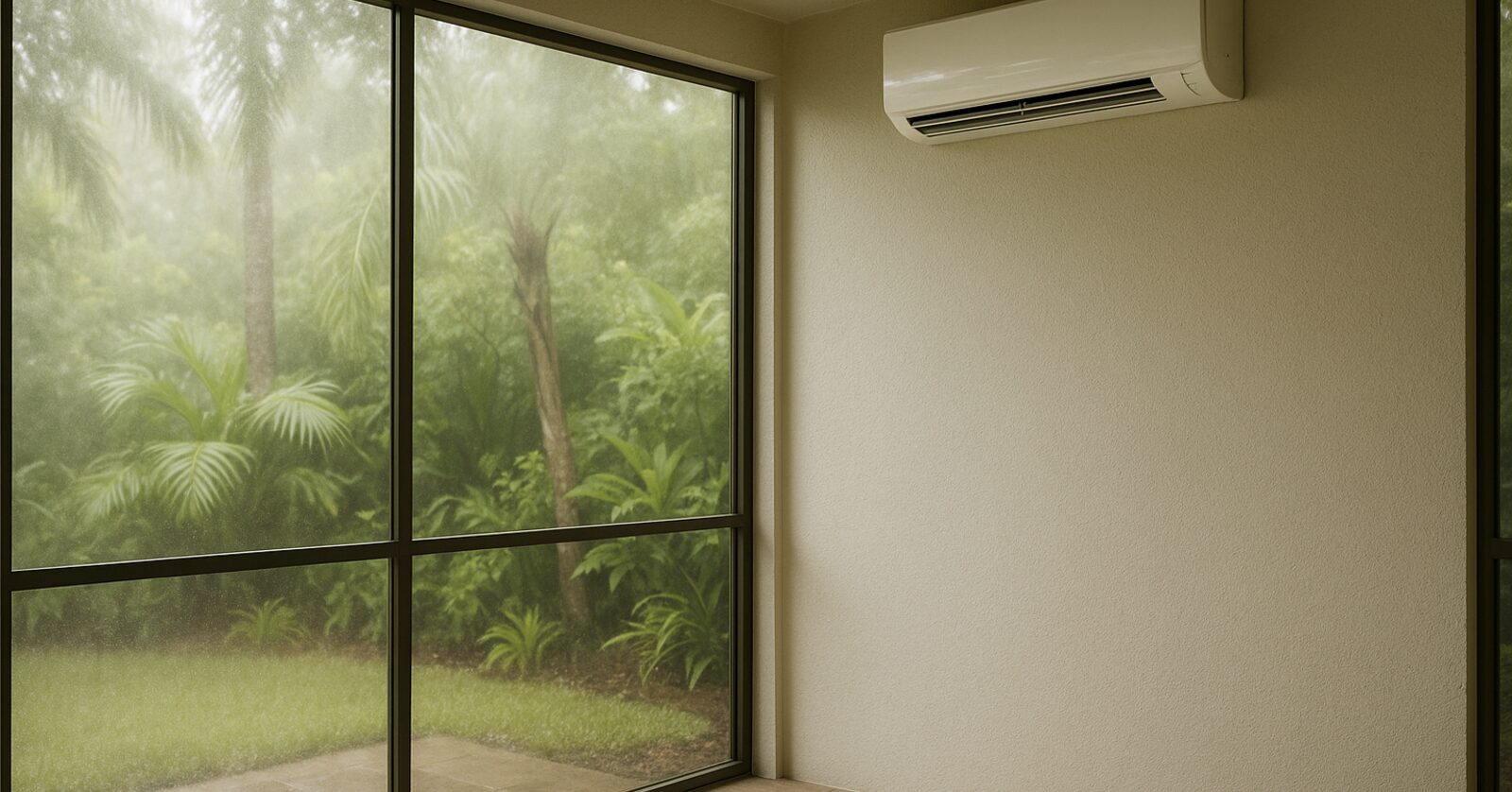
Sweat is beading on your cold drink, the air feels like a warm wet towel, and your mini-split has been running for hours. Sound familiar? If you live anywhere from Anna Maria Island to Nokomis, this is a real and frustrating problem - and it is not a sign that your system is broken. It is a sign that your system is being asked to do something it was not quite set up to handle.
Gulf Coast humidity is genuinely different from what most HVAC equipment is designed around. Understanding why that is true, and what you can do about it, will save you money, improve your comfort, and protect your home from the slow damage that persistent indoor moisture causes.
Why Gulf Coast humidity is unusually punishing
Sarasota, Bradenton, and the surrounding barrier islands sit right on the edge of a subtropical climate. From roughly May through October, afternoon dew points regularly hover between 72°F and 78°F. That is not just "humid." At those dew points, the air is almost completely saturated before a single drop of rain falls. Every time someone opens a door in a home on Casey Key or downtown Sarasota, a wave of near-saturated air rushes in.
The result indoors is a latent heat load - the hidden moisture load in the air - that is enormous compared to what the same size home would carry in, say, Atlanta or Charlotte. HVAC systems are rated with two numbers: sensible capacity (cooling you can feel as a temperature drop) and latent capacity (moisture removal, measured in pints per hour or grains per pound). Most mini-splits, including many well-known brands, are engineered with sensible capacity as the primary focus. The latent performance is secondary.
That matters a lot here, and it is the root cause of most "my house still feels humid even though the AC is running" complaints we hear throughout Lakewood Ranch, Venice, and Osprey.
The three most common reasons your mini-split is losing the humidity battle
1. The system is oversized for your space
This is the single biggest culprit. When a mini-split is too large for the room or zone it serves, it cools the air down to the thermostat setpoint very quickly, then shuts off. Short run cycles feel efficient, but they are actually terrible for dehumidification.
Here is why: a mini-split's indoor coil only pulls significant moisture out of the air when it has been running long enough to get thoroughly cold and stay cold. That usually takes eight to fifteen minutes of sustained operation. A unit that satisfies the temperature call in five minutes and then shuts off is barely touching the latent load. The air feels cooler but the relative humidity barely moves. Over a long hot day, the moisture accumulates.
If your unit seems to blast cold air and then click off after a few minutes, oversizing is almost certainly part of your problem. You can read more about getting the numbers right in our post on whether your mini-split is the right size for your Sarasota home.
2. The system is running in the wrong mode or at the wrong fan speed
Most mini-split remote controls include a "Dry" mode and adjustable fan speeds. These settings exist for a reason, but many homeowners never touch them after the first week of use.
Fan speed matters more than most people realize. A higher fan speed moves more air across the coil, which sounds productive - but it actually reduces dehumidification. Air moving quickly across a cold coil does not have enough contact time to surrender much of its moisture. Dropping to a lower fan speed (or letting the system run on "Auto" fan) forces the air to linger against the cold coil surface and gives condensation time to form and drain.
Dry mode lowers the coil temperature while reducing the compressor's cooling output, essentially prioritizing moisture removal over temperature drop. On an overcast, 78°F day in Bayshore Gardens when the temperature feels fine but the air is sticky, Dry mode is often the right call. It will dehumidify without overcooling the space.
Auto mode for the overall system is another underused feature. When the system manages its own compressor speed and fan simultaneously, it can extend run cycles and maintain the coil conditions best suited to latent removal.
3. There is a hidden infiltration problem the mini-split cannot overcome
A mini-split is not a pressurization system. It conditions the air already inside your home, but it cannot stop outside air from leaking in. Homes on the Gulf Coast - especially older construction on Main Street at Lakewood Ranch or the older Craftsman bungalows in downtown Venice - often have gaps around window frames, recessed lights, attic hatches, and plumbing penetrations that allow warm, humid outside air to seep in continuously.
If your home leaks like a screen door, no mini-split on earth will keep up with the latent load. The system removes moisture, the leaks replace it, and you feel permanently damp at a perfectly comfortable 74°F.
The fix here is not a bigger mini-split. It is air sealing. A roll of foam backer rod and a few cans of expanding foam sealant applied to the worst penetrations can make a surprising difference. Adding weatherstripping to frequently used exterior doors - especially the sliding glass doors so common in Sarasota and Osprey waterfront homes - can also help.
What you can actually do right now
You do not need to replace your equipment to get better humidity control in most cases. Start with these steps:
- Lower the fan speed on your indoor head to low or medium-low and let it run longer cycles.
- Try Dry mode on days when the temperature is tolerable but the air feels clammy.
- Check your drain line. A partially blocked condensate drain line causes water to back up against the coil, reducing its ability to pull moisture from the air. The drain should drip steadily when the system is running on a humid day.
- Set the temperature slightly lower at night. Cooler setpoints extend run cycles, which helps latent removal even if the goal is not to make the room colder.
- Crack the dehumidistat setting on any whole-home dehumidifier you may already own. Many homeowners in Nokomis and Venice install standalone dehumidifiers without realizing the mini-split and the dehumidifier are fighting each other at the wrong settings.
- Check that the outdoor unit's coil fins are clean. A clogged outdoor coil forces the system to work harder and run hotter, which degrades both sensible and latent performance. Our seasonal maintenance checklist for Sarasota's salt-air climate walks through exactly how to do this safely.
When a standalone dehumidifier makes sense
If your mini-split is correctly sized, well-maintained, and properly configured, but you are still fighting relative humidity above 55 percent indoors, a dedicated whole-home or whole-zone dehumidifier is the right answer. These units are designed specifically for latent removal and can process dozens of pints of water per day without the temperature side effects of an air conditioner working overtime.
Pairing a dehumidifier with a mini-split is a common and effective setup in coastal communities like Casey Key, Anna Maria Island, and along the Bayshore area. The mini-split handles the temperature, the dehumidifier handles the moisture, and neither one has to work beyond its design limits.
This combination also protects your home structurally. Persistent indoor humidity above 60 percent accelerates wood rot, feeds mold growth behind walls, and causes paint to bubble and peel. In a coastal climate, those problems show up faster than most homeowners expect.
Could it be a refrigerant issue?
Yes, though it is less common than the issues above. A mini-split running low on refrigerant will have a cold coil that is inconsistently cold, which produces erratic dehumidification. You might notice frost on the indoor head, longer-than-usual run times, or a system that simply cannot seem to reach setpoint. These are signs to call a technician rather than adjust settings.
Similarly, a failing expansion valve or a dirty blower wheel inside the air handler can both degrade latent performance without obviously breaking anything. If you have worked through all the settings changes above and still have humidity problems, a professional inspection is the next step. You can learn more about what our technicians look for on our mini-split services page.
The right setup from the start makes all the difference
Most of the humidity problems we troubleshoot in Bradenton, Lakewood Ranch, and across the Sarasota area trace back to the original equipment selection and installation. A unit that was chosen primarily on price, or sized by a rule-of-thumb square footage calculation without accounting for window area, insulation quality, or Gulf Coast latent loads, is going to struggle.
Single-zone versus multi-zone system design also plays a role. A multi-zone system running at partial load - say, two of four zones calling for cooling - will often short-cycle even if each individual head is sized correctly, because the outdoor unit modulates to a point where run times get very short. Getting that balance right requires real load calculations, not guesswork.
If you are planning a new installation or replacing an existing system, doing the design work up front pays for itself in lower utility bills and better comfort. Check out our transparent pricing information to understand what a properly designed system costs, and when you are ready, get a free quote so we can look at your specific home and situation.
A note on our local climate and what "comfortable" actually means here
Comfort in southwest Florida is not just about temperature. At 74°F with 70 percent relative humidity, a room feels warm and sticky. At 74°F with 50 percent relative humidity, it feels genuinely cool and pleasant. Your thermostat only reads one of those numbers.
That is why chasing a lower thermostat setting rarely solves the sticky-house problem. The answer is controlling both variables: temperature and humidity. When your system is sized right, maintained well, and configured for the Gulf Coast climate, that combination is absolutely achievable - even on a brutal August afternoon in Sarasota or out on the water side of Venice.
If you would like a second set of eyes on your system or your home's setup, our team is happy to help. We work throughout Bradenton, Lakewood Ranch, Osprey, Nokomis, and the wider Gulf Coast area. A single service call to diagnose a humidity problem is almost always far cheaper than living with it for another sweaty summer.