How a ductless heat pump warms your Sarasota home on a cold January morning
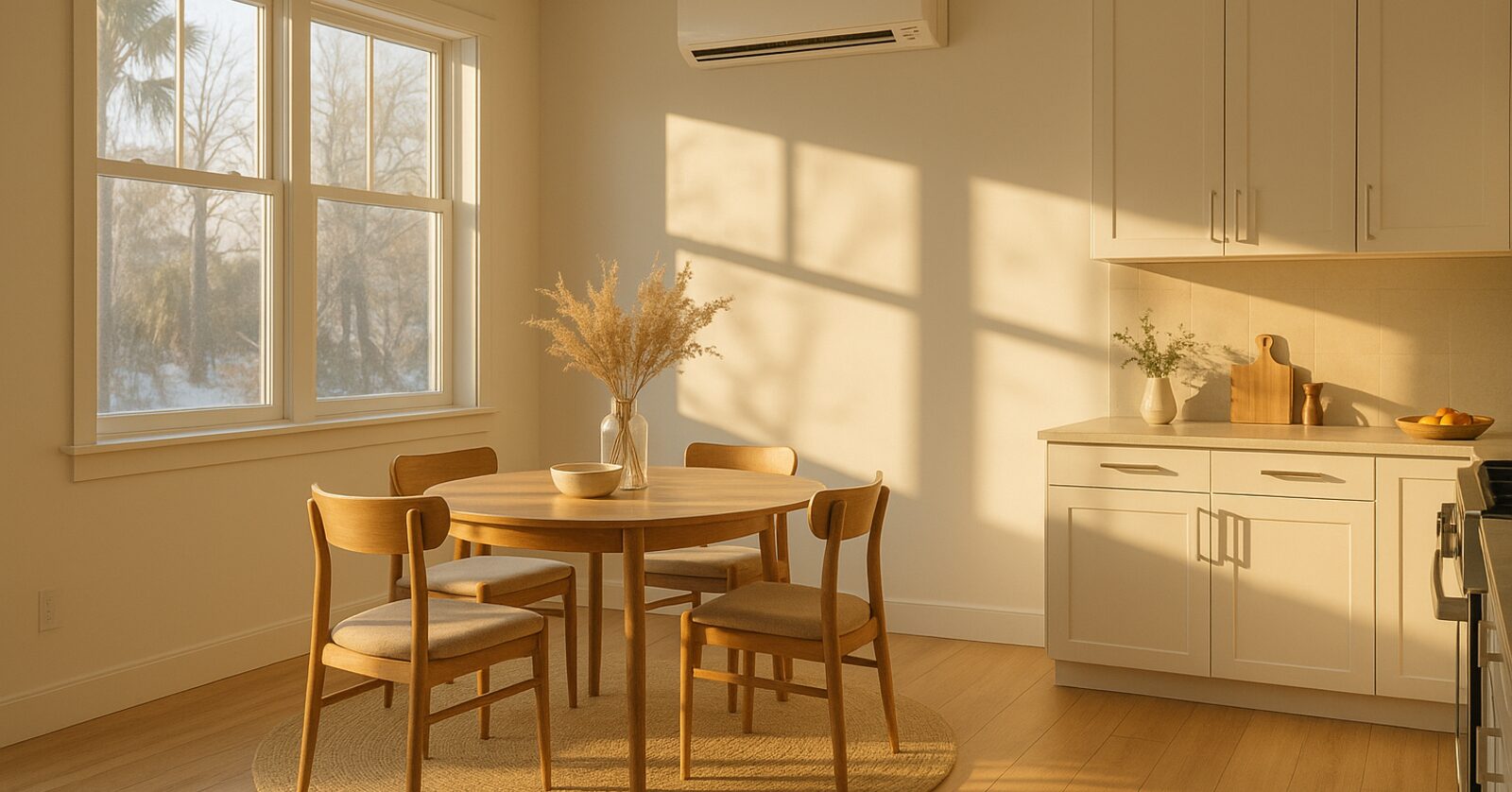
Florida cold snaps are no joke to the people living through them. You wake up on a January morning in Sarasota, the overnight low has dipped to 44°F, and the tile floor feels like a slab of ice under your feet. If your home runs on a ductless mini-split heat pump, you reach for the remote, tap the heat button, and within a few minutes warm air is already rolling across the room. If you're still relying on a space heater or an old window unit, you're huddled under a blanket waiting for something that never quite arrives.
This post is a deep, honest look at how a ductless heat pump actually produces that warmth, why it works so well in a Gulf Coast climate like Sarasota's, and what you should know so you can get the most out of your system on the coldest mornings of the year.
What a heat pump actually does (it doesn't "make" heat)
The single most important thing to understand about a heat pump is the name itself. It pumps heat. It does not generate heat the way a furnace or a space heater does, which means it doesn't have to burn fuel or glow red-hot to warm your home.
Here's the basic cycle:
- Refrigerant in the outdoor unit absorbs heat energy from the outside air, even when that air feels cold to you.
- A compressor pressurizes the refrigerant, which dramatically raises its temperature.
- That hot, pressurized refrigerant travels through a small line set to the indoor air handler mounted on your wall.
- The indoor unit blows your room air across a warm coil, transferring the heat into the space.
- The cooled refrigerant flows back outside to collect more heat, and the cycle repeats.
The key insight: outside air at 44°F still contains a large amount of usable heat energy. Modern inverter-driven mini-splits are engineered to extract that energy efficiently down to outdoor temperatures well below freezing. On a typical Sarasota January morning, the outdoor unit is working well within its comfort zone.
This is why a heat pump can deliver two to three units of heat energy for every unit of electricity it consumes. A resistance space heater gives you one unit of heat per unit of electricity, every time, by definition. The math strongly favors the heat pump, and that difference shows up on your FPL bill.
Why the Gulf Coast climate is actually ideal for heat pump heating
Sarasota's winters are mild by almost any national standard. The average January low sits in the mid-50s°F, and genuine overnight temperatures below 40°F are rare. Even on the coldest recorded nights in the area, temperatures seldom stay below freezing for more than a brief window before sunrise.
This matters because heat pump efficiency (measured as a Coefficient of Performance, or COP) rises as outdoor temperatures rise. The milder the cold, the more efficiently the system extracts heat. So while a homeowner in Minneapolis might struggle with heat pump performance on a -10°F night, a homeowner in Sarasota is almost always operating in the sweet spot where the system performs at peak efficiency.
Communities like Lakewood Ranch, Osprey, Nokomis, and Bayshore Gardens rarely see sustained cold. Anna Maria Island and Casey Key benefit from the moderating effect of the Gulf and Sarasota Bay, which keeps overnight lows even more stable than inland neighborhoods. Venice and Downtown Venice sit far enough south that hard freezes are genuinely unusual. In every one of these communities, a ductless heat pump is a logical, efficient choice for the handful of cold weeks each year.
How fast does it actually heat up?
Speed is one of the most underrated advantages of a mini-split in a Florida home. Because the indoor air handler is mounted directly in the living space, conditioned air reaches you immediately. There is no ductwork to pre-heat, no cold air dead zone while the system purges a 40-foot run of duct, and no register on the far side of the house that takes forever to feel warm.
On a typical Sarasota January morning, you can realistically expect:
- Immediate airflow from the moment the fan starts (usually within 30 seconds of turning on).
- Noticeable warmth at the handler within 2 to 3 minutes once the compressor reaches operating pressure.
- Room temperature increase of several degrees within 10 to 15 minutes in a normally insulated Florida room or bedroom.
- Full target temperature reached within 20 to 35 minutes depending on room size, how well-sealed the space is, and how large the system is relative to the room.
If your unit is struggling to reach set point in a reasonable amount of time, that's often a sizing issue worth investigating. Our guide on whether your mini-split is the right size covers the specific calculations and symptoms to watch for.
The role of inverter technology
Older HVAC systems, including early mini-splits, used single-speed compressors. They ran at 100% capacity or not at all. That on-off cycling created temperature swings and wasted energy during mild weather.
Modern inverter-driven mini-splits vary the compressor speed continuously. When the outdoor temperature is 50°F and your home just needs a small amount of heat, the compressor slows down and trickles in exactly the right amount. When it's genuinely cold and the house needs to catch up, the compressor ramps up to full capacity.
The practical result on a cold January morning in Bradenton or Lakewood Ranch:
- You turn on the system.
- The compressor runs at high speed to bring the room up to temperature quickly.
- Once the target is reached, it drops to a low murmur to maintain it, rather than shutting off and cycling back on.
- Temperature stays more consistent, the system runs more quietly at steady state, and energy consumption stays lower than a cycling system.
This is one of the reasons modern mini-splits earn high HSPF (Heating Seasonal Performance Factor) ratings. Higher HSPF means more heat delivered per kilowatt-hour of electricity consumed across a full heating season.
Common mistakes that reduce heating performance
Even a well-sized, properly installed system can underperform if a few basic things are wrong. Here are the most frequent issues we see during cold-weather service calls across the Sarasota area.
Leaving the mode set to "Cool" or "Auto." Some homeowners forget that the system has a dedicated Heat mode. Auto mode can work, but it sometimes hesitates or makes an unexpected decision. On a cold morning, put the remote in Heat mode manually.
Setting the temperature too conservatively. Set your target temperature to something realistic, like 72°F, rather than nudging it up to 85°F hoping it will heat faster. The inverter compressor will run at full capacity regardless of the set point gap; you won't get more heat by setting a higher number, and you risk overshooting and running uncomfortably warm.
Dirty air filters. A clogged filter reduces airflow across the indoor coil, which directly reduces the amount of heat transferred into the room. In the warm months we focus on this for cooling efficiency and humidity control, but it matters just as much for heating. Our seasonal maintenance checklist walks through the full filter-cleaning process for Gulf Coast conditions.
Blocked outdoor unit. The outdoor unit needs clear airflow to extract heat from the outside air. Overgrown shrubs, stored equipment, or debris around the unit reduce its efficiency. Check the clearance around your outdoor unit a couple of times per year.
Open doors or leaky windows. A mini-split is sized for a specific space. If you're trying to heat an open-plan home with one zone, or running the system with a sliding glass door cracked open, the system will work much harder to maintain temperature. In communities like Anna Maria Island and Casey Key, where homes are often more open to the breeze, this is a real consideration during cold fronts.
Defrost cycles: what's that noise?
On a cold morning, you might hear the outdoor unit make a whooshing sound and notice a brief puff of steam or mist. This is the defrost cycle, and it's completely normal.
When outdoor temperatures drop below the dew point and the coil gets cold enough, frost can form on the outdoor unit's heat-exchange fins. Frost reduces efficiency, so the system briefly reverses the refrigerant flow to melt the frost, then returns to heating mode. The whole cycle usually takes two to five minutes, during which the indoor unit may pause or blow slightly cooler air.
Some homeowners are startled by this and assume something is broken. It isn't. If defrost cycles are happening very frequently or lasting an unusually long time, that could indicate a refrigerant issue or a sensor problem worth having a technician look at, but occasional defrost on a cold, humid morning is just the system doing its job.
Heating a home with multiple zones
Many homes in Sarasota, Bradenton, and Lakewood Ranch use multi-zone mini-split systems, where one outdoor unit connects to two, three, or even four indoor air handlers in different rooms. Each zone has its own remote and thermostat, which means each person in the house controls only the space they're actually using.
On a cold January morning, this is genuinely useful. You can heat the master bedroom and kitchen while leaving the guest room at a lower temperature. You're not paying to heat the entire house to keep one person comfortable. And if a cold front is moving through while the rest of the family is at school or work, you can dial back every zone from your phone if the system has a Wi-Fi module.
If you're weighing whether a single-zone or multi-zone setup makes sense for your specific home layout, our comparison post on single-zone vs. multi-zone ductless systems covers the trade-offs in detail.
What about supplemental heat strips?
Some mini-split systems come with optional electric resistance heat strips built into the indoor unit. These are rarely necessary in Sarasota's climate, but they do exist as an option. Heat strips act as a backup on extremely cold nights when the heat pump's efficiency drops, ensuring the system can still reach set point.
For most of the communities we serve, from Venice and Nokomis to Osprey and Bradenton, heat strips are an extra cost with very limited real-world use. The occasions where outdoor temperatures are low enough to actually need them in this part of Florida are very few. If a salesperson insists you need heat strips for a coastal Southwest Florida installation, it's worth asking for a specific reason why.
What to expect from installation and service
If you're considering adding a mini-split for heating and cooling, or you're replacing an older system, the process is more straightforward than most homeowners expect. We cover the full installation day experience in our post on what to expect during mini-split installation, but the short version is: most single-zone installations are completed in a single day with minimal disruption.
Our team works across the full Sarasota area, including Lakewood Ranch, Venice, and all the communities in between. If you'd like a straightforward conversation about what heating and cooling solution makes sense for your home, you can get a free quote with no pressure and no guesswork.
The bottom line
A ductless heat pump works on a cold January morning in Sarasota because it's doing exactly what it was designed to do: extract existing heat from outdoor air and move it efficiently into your home. The Gulf Coast climate, with its mild winters, is one of the best possible environments for this technology. The system heats up fast, runs quietly once it reaches set point, and costs significantly less to operate than resistance heating.
If you want to understand more about the full range of mini-split services available for your home, or if you'd like to see what a system might cost before committing to anything, our pricing page lays out the real-world numbers for installations in this area.
Cold fronts in Sarasota are temporary. A well-installed, properly maintained mini-split keeps you comfortable through every one of them without breaking a sweat.