How much does mini-split installation cost in Florida?
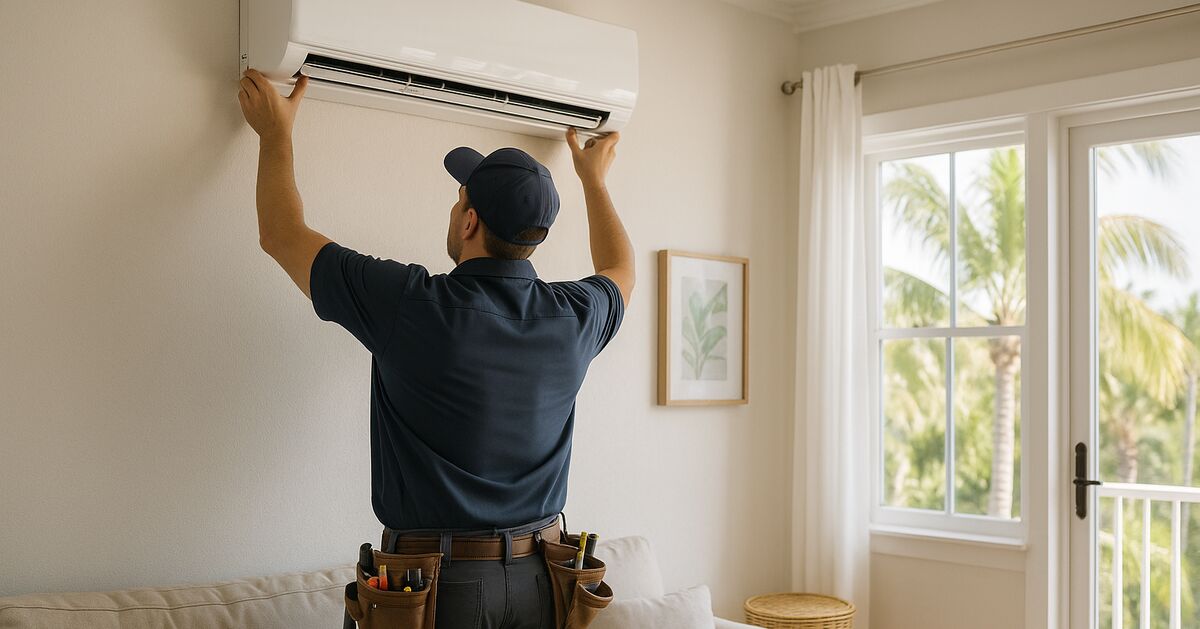
Florida heat is relentless, and the moment you decide a ductless mini-split is the right move, the very next question is almost always the same: what is this going to cost me? It's a fair question, and you deserve a straight answer rather than a vague "it depends."
The honest truth is that installation prices do vary, sometimes quite a bit, but not randomly. Every dollar of difference traces back to a handful of concrete factors you can understand and even control. Walk through those factors below, and by the end you will know exactly what to ask a contractor and roughly where your project is likely to land.
Why Florida installations are priced differently than the rest of the country
Before diving into the line items, it helps to understand why you can't simply copy a price you saw on a national home-improvement forum. Florida's climate creates specific demands that affect both equipment selection and labor.
Our summers average high humidity alongside punishing heat. A system that is undersized will run continuously and still leave you uncomfortable. A system that is oversized will short-cycle, meaning it turns on and off too frequently, which raises humidity inside rather than lowering it. Getting the sizing right matters enormously here, as we explain in detail in our post on whether your mini-split is the right size for your Sarasota home.
Salt air is the second Florida-specific issue. Coastal communities like Anna Maria Island, Casey Key, Osprey, and Nokomis sit close enough to the Gulf that salt-laden air accelerates corrosion on coils, fins, and electrical connections. Equipment rated for coastal environments, and installation practices that account for salt exposure, are not optional luxuries here. They directly affect how long the system lasts. Our guide on how long a mini-split lasts in Florida's climate covers this in full.
Both of these factors influence what equipment your installer should recommend and how the job gets quoted.
The main factors that move the price up or down
1. Number of zones (indoor heads)
A single-zone system, one outdoor condenser connected to one indoor air handler, is the simplest and least expensive configuration. If you are cooling a home office, a Florida room, a garage conversion, or a primary bedroom in a home that already has central air for the rest of the house, a single-zone unit is often all you need.
A multi-zone system connects one outdoor unit to two, three, four, or even five indoor heads. This lets you condition different rooms independently from a single compressor. The equipment cost rises with each additional indoor head, and so does labor time, because each head needs its own refrigerant line set, electrical connection, and drain line.
The right number of zones is not just a budget decision. It is a comfort and efficiency decision. Oversimplifying to save money upfront can mean buying a second system later at full cost.
2. BTU capacity and efficiency rating (SEER2)
Mini-splits come in a range of cooling capacities, measured in BTUs. Larger spaces, rooms with lots of windows, west-facing walls that bake in the afternoon sun, and open floor plans all require more capacity. Getting this calculation right is part of what you pay a qualified installer to do.
The efficiency rating, expressed as a SEER2 number, affects the unit's purchase price but also your monthly electric bill for the life of the system. Higher-efficiency equipment costs more upfront and saves money over time. In Florida, where a mini-split may run the vast majority of the year, that long-term math often favors investing in a higher SEER2 model.
3. Line-set length and routing complexity
The refrigerant line set connects the outdoor condenser to the indoor head. Short, straight runs with easy access are inexpensive to install. Long runs, lines that have to travel through finished walls or attic spaces, or jobs that require the contractor to chase lines through multiple floors add both material cost and labor time.
A quick install where the outdoor unit sits just outside the room being conditioned is very different from a job where lines need to travel forty feet through a finished interior. Contractors will assess this during their site visit, which is a key reason why phone quotes without a walkthrough should be taken with caution.
4. Electrical work required
Every mini-split needs a dedicated circuit. If your electrical panel has capacity and a circuit can be run easily, this is a modest cost. If your panel is already full and needs a new breaker, or if the run to the outdoor unit is long and involves conduit through a finished space, electrical costs can add up meaningfully.
Older homes in areas like Downtown Sarasota or parts of Bradenton sometimes have panels that need upgrading before a new circuit can be added safely. A good installer will flag this during the estimate so there are no surprises.
5. Installation location and access
Ground-floor installations with easy exterior wall access are the most straightforward. Second-floor rooms, high-ceiling spaces, or situations where the outdoor unit needs to be mounted on a roof bracket or elevated platform add time and equipment to the job.
Homes on Anna Maria Island or Casey Key, where lot sizes are often small and exterior access can be tight, sometimes require creative mounting solutions that a mainland job would not.
6. Brand and equipment tier
There is a real spectrum of mini-split brands, from budget units sold at big-box stores to professional-grade equipment installed only by certified contractors. Mid-tier and premium brands typically carry better warranties, use higher-quality compressors, and are more serviceable when something goes wrong years down the road.
A contractor who stands behind their work will steer you toward equipment they are confident in, not necessarily the cheapest unit available. Ask about the warranty on both parts and labor, and what brand support looks like locally if you ever need it.
7. Labor rates in your specific area
Labor costs vary across our service territory. Jobs in Venice, Nokomis, or Lakewood Ranch may be quoted differently than jobs in Downtown Sarasota or on Anna Maria Island, partly because of drive time and partly because of local market conditions. This is another reason to get quotes from a contractor who actually serves your area regularly rather than one who is traveling in from far outside the region.
What to watch out for in a quote
A suspiciously low quote is worth scrutinizing carefully. Some contractors cut costs by:
- Undersizing equipment to reduce the unit price, leaving you uncomfortable
- Using short line-set cuts that don't reach where they should
- Skipping proper vacuum-down procedures on the refrigerant lines, which shortens system life
- Omitting line-set covers or conduit that protects lines from UV and physical damage outdoors
- Not pulling permits where permits are required
A thorough, professional installation includes a Manual J load calculation (or at minimum a careful room-by-room assessment), proper line-set sizing, a full vacuum-down before charging the refrigerant, secure mounting for both indoor and outdoor units, and a walkthrough with you so you understand how to operate the system and what normal operation looks like.
How to get an accurate number for your specific project
Because so many variables affect the final price, the most useful thing you can do is invite a contractor to walk the space with you. A site visit costs you nothing with a reputable company and produces a quote that reflects the actual job rather than a guess.
When comparing quotes, make sure you are comparing the same scope. Ask each contractor:
- What brand and model are you quoting, and what is the SEER2 rating?
- Does this price include all electrical work, or is that separate?
- How long is the refrigerant line run, and is that included?
- What does your warranty cover, and for how long?
- Will you pull permits if required?
Those questions will surface the real differences between quotes and help you make a decision you feel good about.
The Sarasota area context
Across our service territory, from Sarasota and Bradenton to Venice, Lakewood Ranch, Osprey, and Nokomis, the homes we work in vary widely. We see compact condos in Downtown Sarasota, sprawling new construction on the east side of Lakewood Ranch, older concrete-block homes near Bayshore Gardens, and Gulf-front cottages on Casey Key, each with its own quirks.
That variety is exactly why a local contractor with genuine familiarity with the area makes a difference. We know the typical panel situations in older neighborhoods, the salt-air exposure levels on and near the water, and the kinds of routing challenges that come up in Florida construction styles. You can learn more about who we are and how we work if that kind of background matters to you when choosing who does the work.
If you have questions we haven't covered here, our FAQ page addresses many of the common concerns homeowners bring to us before signing anything. And when you are ready to get a specific number for your home, the easiest next step is to reach out and schedule a free estimate. No pressure, no obligation, just a clear picture of what your project actually involves.
The bottom line
Mini-split installation in Florida is not a one-size-fits-all price, but it is also not a mystery. The cost reflects the size and complexity of your specific project, the quality of equipment your situation calls for, and the expertise of the contractor doing the work. Understanding those drivers puts you in a much better position to evaluate quotes, ask the right questions, and invest with confidence in a system that will keep you comfortable for years to come.
If you want to understand all the ductless mini-split services that go into a proper installation and what ongoing service looks like after the job is done, that's a good place to start before your estimate conversation.