Choosing the right SEER2 rating for your Florida mini-split
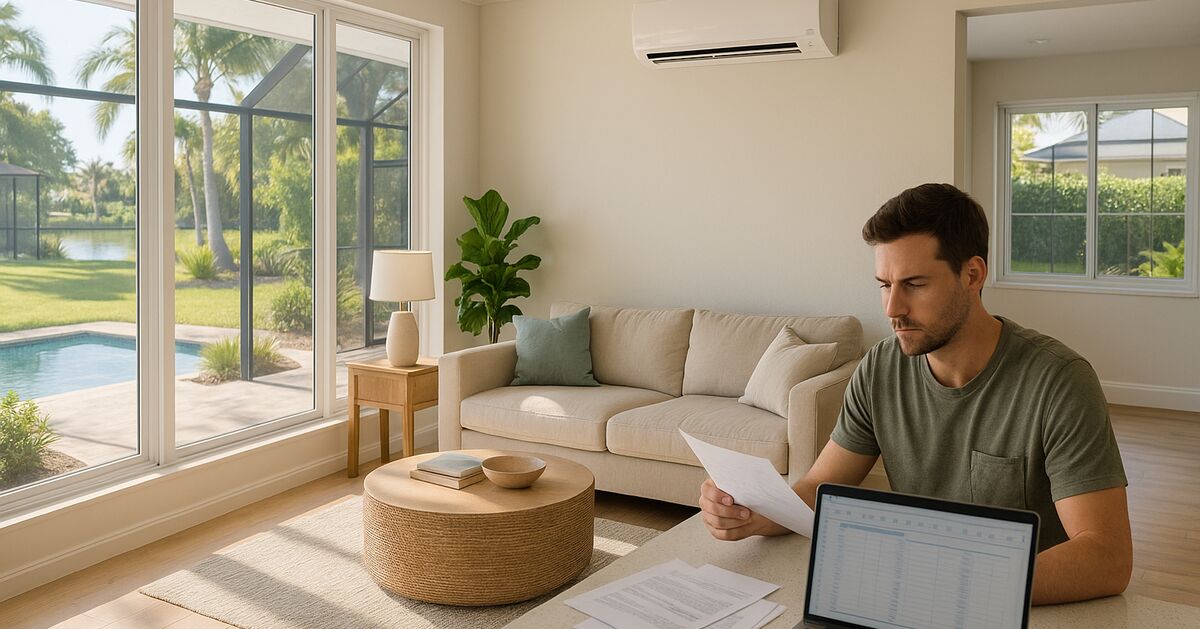
Florida's air conditioner runs more hours per year than almost anywhere else in the country, and that one fact changes everything about how you should shop for a mini-split. A unit's SEER2 rating is not just a spec-sheet number to ignore while you compare prices. It is the single biggest lever that controls your monthly electricity bill once the system is installed. Get it wrong in either direction and you either overpay upfront for efficiency you will never recoup, or you leave real money on the table every summer for years.
This guide will walk you through exactly what SEER2 means, why Florida math is different from the national average, and how to decide with confidence which rating makes financial sense for your home in Sarasota, Bradenton, Lakewood Ranch, Venice, or anywhere else along our stretch of the Gulf Coast.
What SEER2 actually measures
SEER2 stands for Seasonal Energy Efficiency Ratio, second edition. The "2" matters: the federal government updated the testing standard in 2023 to use slightly higher external static pressure during lab testing, which means SEER2 numbers are a bit lower than the old SEER numbers for an identical unit. A system rated SEER2 18 is roughly comparable to an older SEER 19 or 20 system.
The ratio itself is simple. SEER2 divides the total cooling output a unit delivers over a full season (measured in BTUs) by the total electrical energy it consumes (measured in watt-hours). A higher number means you get more cooling for every dollar of electricity. A unit with a SEER2 of 20 is pulling more cooling out of each kilowatt-hour than a SEER2 15 unit would on the same day.
One important nuance: SEER2 is a seasonal average, not a fixed real-time measure. The rating assumes a range of outdoor temperatures over the course of a typical cooling season. That assumption is where Florida homeowners need to pay close attention.
Why Florida changes the efficiency calculation
The federal SEER2 testing standard models a climate where temperatures vary widely across the season. A significant chunk of the theoretical "cooling season" in that model is spent at mild outdoor temperatures where the compressor coasts along at low demand.
Sarasota and Bradenton homeowners know our reality is different. From late April through October, daytime highs hover between the upper 80s and low 90s with humidity that never really lets up. Even in December and January, we often run the air conditioning. The system that spends a lot of its model season loafing at low load is, for us, working hard for nine or ten months straight.
This matters for two reasons. First, a higher SEER2 rating saves you proportionally more money in Florida than it would for a homeowner in, say, North Carolina, simply because you accumulate more run hours per year. The efficiency advantage compounds. Second, because the compressor runs so often at or near moderate-to-high load, the real-world efficiency gap between a budget-tier unit and a premium unit tends to be wider in our climate than the raw numbers suggest.
If you have questions about how this plays out in dollars and cents for your specific situation, our frequently asked questions page covers the electricity cost math in plain language.
The SEER2 tiers and what they mean in practice
Think of the market in three broad bands.
Entry-level: SEER2 15 to 17
These units meet the new federal minimum standard for Florida (the Southeast has a higher minimum than cooler regions). They are less expensive to purchase and install. For a vacation property that sits empty most of the year, a guest room that sees light use, or a very tight budget situation, they can be the right answer. But for a primary residence in Osprey, Nokomis, or Anna Maria Island that runs the system most of the day, every day, the monthly operating cost will be noticeably higher than a mid-tier or premium system.
Mid-range: SEER2 18 to 22
This is the sweet spot for most full-time Florida homeowners. The upfront premium over an entry-level system is meaningful but moderate, and the payback period in reduced electricity costs is typically achievable within a reasonable number of years. Inverter-driven compressors are standard at this tier, which means the system modulates its output rather than cycling on and off, keeping temperature and humidity more stable and reducing wear.
Premium: SEER2 23 and above
Top-tier systems can carry impressive SEER2 numbers. For households with very high cooling loads, homes with large open-plan spaces, or homeowners who run the system continuously, the premium can absolutely justify itself over time. The math requires honest analysis of your usage patterns and local electricity rates. For a home in Downtown Sarasota or along the water at Casey Key where the unit runs essentially year-round, the calculus often favors going premium.
Our ductless mini-split installation and service team can run the numbers with you before you commit to any tier.
The honest math: payback period
The concept of a payback period is straightforward. You pay more upfront for a higher-efficiency system. Each month your bill is lower. At some point, the accumulated savings equal the extra upfront cost. After that crossover point, every month is pure savings.
The variables that drive the payback period are:
- Your electricity rate. Florida Power & Light and TECO rates have risen over the last several years. Higher rates mean efficiency saves you more per unit of energy.
- Your annual cooling hours. A full-time residence on the coast near Venice or Bayshore Gardens will log far more hours than a winter-only snowbird property.
- The size of the efficiency gap. Moving from SEER2 15 to SEER2 20 is a much bigger leap than moving from SEER2 20 to SEER2 22. The first jump saves you more electricity per hour.
- The system's BTU capacity. A larger unit costs more and saves more per efficiency tier. Gains are proportional.
As a general principle, the higher your annual usage and the higher your electricity rate, the shorter your payback period on a more efficient unit. For most Sarasota-area homeowners running a system year-round, the mid-range SEER2 tier reaches payback faster than many people expect, and the premium tier is worth running the numbers on seriously.
For a broader look at what installation investments typically look like in our region, see our post on mini-split installation costs in Florida.
When paying more upfront clearly makes sense
There are specific situations where we consistently see the higher-SEER2 choice pay off clearly for homeowners.
You run the system all day. If your lifestyle or work-from-home situation means the air conditioning is on from morning through night, your annual kilowatt-hour consumption is high. Efficiency savings scale directly with usage. Our post on running a mini-split all day in Florida explains the usage patterns that tip the balance.
You are cooling a primary residence, not a seasonal property. Full-time residents in Lakewood Ranch or Main Street at Lakewood Ranch accumulate far more operating hours than part-time snowbirds. More hours means faster payback.
Electricity rates are rising in your area. When the cost per kilowatt-hour goes up, efficiency becomes more valuable. This is not speculation in Florida; rates have trended upward and that trend is expected to continue.
You plan to stay in the home for five or more years. Payback periods on premium systems can run three to six years depending on usage. If you are planning to sell in two years, the math gets harder. If this is your long-term home, the numbers often favor the higher investment.
You value consistent comfort, not just lower bills. Higher-SEER2 systems with advanced inverter technology do a better job of holding a steady temperature and managing humidity, which is genuinely important in our coastal climate. That comfort benefit is real even before you factor in the dollar savings.
When a mid-range or entry-level unit is the smarter call
Not every situation favors the premium system. Here is when we advise homeowners to think carefully before going to the top of the SEER2 range.
Supplemental or single-room cooling. If you are adding a mini-split to condition a garage workshop in Bradenton or a sunroom addition in Nokomis that sees only occasional use, the payback period on a premium unit stretches out considerably. A solid mid-range system is often the better fit.
Very tight budget. A more efficient system installed later beats an uninstalled one. If the budget is firm, it is reasonable to choose a unit you can afford now and upgrade later when the system reaches end of life.
Short planning horizon. If you know the home is being sold within a couple of years, the upfront premium may not return to you in the sale price.
For homeowners across our service area, we try to give honest guidance rather than default to the highest-price option.
What to ask when comparing quotes
When you are looking at multiple systems and the SEER2 numbers differ, ask these specific questions.
- What is the SEER2 rating of each unit being quoted, and is that the unit's rated or estimated real-world output?
- Is the compressor inverter-driven on both units? (It should be on anything SEER2 18 and above.)
- What is the estimated annual operating cost difference at current local electricity rates?
- What is the payback period based on my estimated usage hours?
- Does either system qualify for a federal energy efficiency tax credit? (The Inflation Reduction Act includes credits for qualifying high-efficiency heat pumps. A good installer should know which units qualify.)
Our team serving Sarasota, Venice, and surrounding communities is always willing to walk through this comparison with you in plain terms. You can also reach out directly if you want a specific recommendation before you commit.
SEER2 and the heat pump question
Most modern mini-splits sold in Florida are heat pumps. They cool in summer and heat in winter by reversing the refrigerant cycle. If you want to understand how that works and why it is relevant in our mild winters, our post on what Florida homeowners should know about mini-split cooling and heating covers it well.
The efficiency of the heating mode is rated separately using HSPF2 (Heating Seasonal Performance Factor). For Florida, where heating demand is low and brief, HSPF2 matters less than SEER2 in the long-run cost calculation. Focus your analysis on SEER2 first.
A note on brand and installation quality
SEER2 ratings are achieved in laboratory conditions with a correctly sized and properly installed system. An undersized or oversized unit, or one with a refrigerant charge that is even slightly off, will not deliver its rated efficiency in the field. The brand name on the unit matters less than the quality of the installation.
This is one reason why comparing quotes on efficiency alone is incomplete. A premium-SEER2 system installed carelessly by a contractor who rushes the refrigerant charge or installs incorrect line set sizing will underperform. A mid-range system installed correctly and sized properly for your space will beat it. Ask about the installer's process, not just the unit's rating. You can read more about our approach if you want to understand what good installation practice looks like.
Putting it all together
Choosing a SEER2 rating in Florida is not a luxury decision reserved for homeowners who want to spend more. For most full-time residents on the Gulf Coast, it is a genuine financial calculation where a higher upfront cost returns real money over time. The warm climate, long cooling season, and rising electricity rates all push the payback period shorter than national averages suggest.
The short version: if you are a full-time resident, run your system regularly, and plan to stay in the home for several years, the mid-range SEER2 18 to 22 tier is almost always worth the premium over entry-level. The top-tier systems above SEER2 22 deserve a real look if your usage is high and your timeline is long.
If you are in Sarasota, Bradenton, Lakewood Ranch, Venice, Osprey, Nokomis, Anna Maria Island, Casey Key, or anywhere else we serve, contact us and we will help you run the numbers honestly before you spend a dollar.