Does a mini-split cool and heat? What Florida homeowners should know
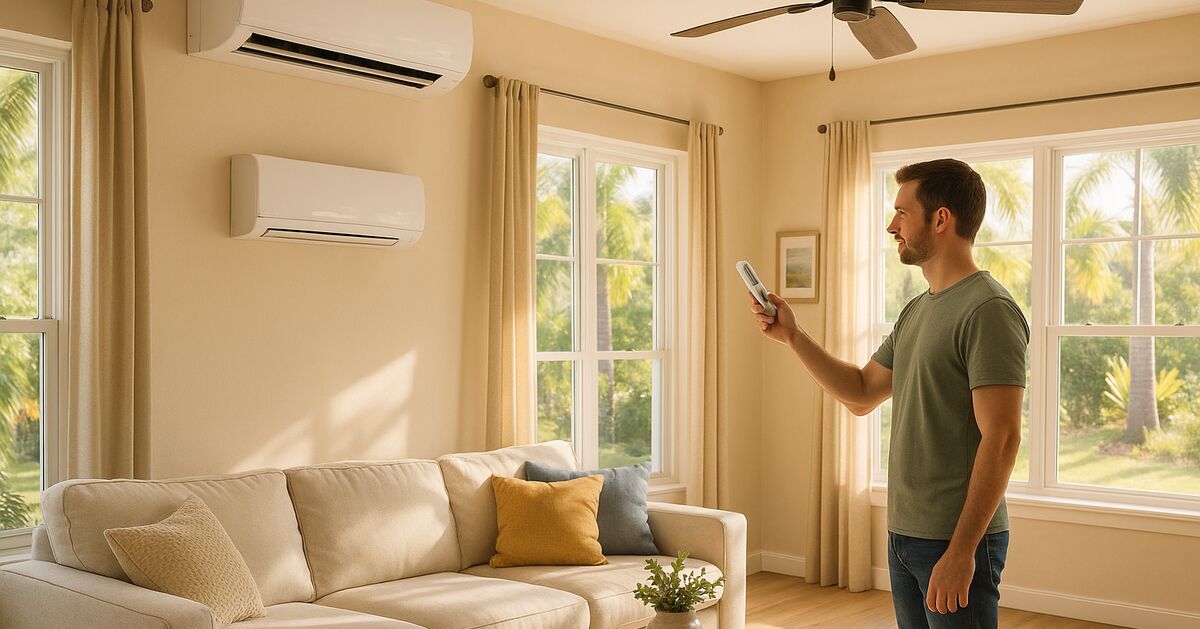
Your mini-split does a lot more than you might think it does when you first press "cool" on the remote.
Most homeowners along the Gulf Coast buy a ductless system because they need air conditioning. A sunroom in Lakewood Ranch is sweltering. A garage conversion in Bradenton has no ductwork. A vacation cottage on Anna Maria Island needs something simple and efficient. So they call, they get a system installed, and they start enjoying cool air. Done, right?
Not quite. Nearly every ductless mini-split sold today is a heat pump - meaning it moves heat in both directions. In summer it pulls heat out of your indoor air and pushes it outside. In winter, it reverses that process and pulls heat from the outdoor air to warm your home. One compact system, two jobs, all year long. Understanding how that actually works - and what its limits are in Florida - can save you money, prevent frustrating surprises, and help you get the absolute most out of your equipment.
How a mini-split heat pump actually moves heat
Most people picture heating as "making heat," the way a gas furnace does. A heat pump works on a completely different principle. It doesn't generate heat from a fuel source; it moves heat that already exists in the outdoor air. Even when the air outside feels cold, there is still thermal energy in it. A refrigerant cycle extracts that energy, compresses it to raise its temperature, and delivers it inside.
This is why heat pumps are so remarkably efficient. You're not burning anything to create warmth; you're just relocating warmth that was already there. In energy terms, a modern inverter-driven mini-split can deliver two to four units of heating energy for every one unit of electricity it consumes. No electric resistance heater, no gas furnace can beat that math.
Cooling works the same way in reverse. The refrigerant absorbs heat from your indoor air, carries it outside, and releases it. The compressor, expansion valve, and two sets of coils (one inside, one outside) do all the work. The "cold air" coming from your wall unit is really just air with its heat removed.
Why Florida is the perfect climate for this technology
Heat pumps struggle in very cold climates because the outdoor air eventually loses so much thermal energy that the refrigerant can't extract enough to keep up with heating demand. Traditional heat pumps start losing efficiency around 35 to 40°F. Older models could barely function below that.
Florida almost never reaches those temperatures. Even on the coldest nights in Sarasota, Venice, or Nokomis, temperatures rarely drop below the mid-40s, and sustained cold snaps below 40°F are genuinely unusual. That means a mini-split heat pump here operates in its sweet spot virtually 365 days a year. You never have to worry about the system struggling to heat on a frigid night the way a homeowner in the Midwest would.
Modern "cold-climate" inverter mini-splits push that performance threshold even lower, down to 5°F or below in some models. For homes in our area, that extra cold-weather capability is rarely needed - but it does mean you're getting a system with plenty of headroom even on the occasional chilly January morning along the Gulf Coast.
If you want to go deeper on how the heating side performs locally, our post on how a ductless heat pump warms your Sarasota home on a cold January morning walks through exactly what to expect when temperatures drop.
The one setting that confuses almost everyone
Mini-split remotes and apps typically offer these modes: Cool, Heat, Dry, Fan, and Auto. Cool and Heat are self-explanatory once you know the system does both. But two modes trip people up regularly.
Dry mode is not the same as dehumidification on a dedicated dehumidifier. In Dry mode, the unit runs its cooling cycle at a reduced capacity to remove moisture without dropping the temperature dramatically. For humid but not scorching days - think a September evening in Bayshore Gardens when it's 78°F and sticky - Dry mode can make your home feel comfortable without overcooling it. It's a genuinely useful setting that most owners ignore. If you want the full story on humidity control, take a look at why your mini-split isn't killing Gulf Coast humidity (and how to fix it).
Auto mode lets the unit decide whether to cool or heat based on the room temperature versus your set point. In Florida's climate, where a morning in February might need a little heat and an afternoon might need cooling, Auto mode can be surprisingly practical. Just be aware that some systems have a deadband - a temperature range around the set point where neither cooling nor heating activates - and that this behavior varies by brand.
Does it cost more to use both modes?
Running in heat mode is typically cheaper than running in cool mode for the same "comfort distance" - meaning, if you need to raise the indoor temperature by 5°F in winter, that costs less electricity than lowering it by 5°F in summer. That's because heating in a mild Florida winter asks less of the compressor than cooling during an August afternoon in downtown Sarasota when it's 94°F outside.
For most homeowners in our service area, winter heating adds only a small increment to the monthly electric bill. The far larger cost driver is summer cooling, which runs longer hours at higher loads. If you're looking at annual operating costs, the heating function is almost a free bonus on top of the cooling you were going to buy anyway.
Our frequently asked questions page covers more details about operating costs, efficiency ratings, and what to watch for on your electric bill.
Common mistakes when using heat mode in Florida
Mistake 1: Turning the heat off and relying on a space heater instead. Some homeowners don't realize their mini-split heats, so they plug in an old electric resistance space heater on cold nights. A space heater converts electricity to heat at roughly a 1:1 ratio. Your mini-split delivers two to four times that efficiency. You're spending two to four times more per unit of warmth with the space heater. Just use the mini-split.
Mistake 2: Setting the temperature extremely high expecting faster heat. A mini-split is not a furnace blast. It delivers conditioned air steadily, and the inverter compressor ramps up to meet demand. Setting it to 80°F when you want 72°F won't heat faster; it will just overshoot and then cycle erratically. Set your target temperature, let the system work, and it will get there efficiently.
Mistake 3: Neglecting the outdoor unit in winter. In Florida, "winter maintenance" sounds almost redundant. But the outdoor unit still needs clear airflow. Fallen leaves, lawn debris, or overgrown plants around the condenser can restrict performance in any season. A quick visual check a couple of times a year is all it takes.
Mistake 4: Ignoring the filter because "it's only heat mode." The indoor air handler's filter collects dust and allergens whether you're cooling or heating. A clogged filter reduces airflow and makes the system work harder in both directions. Clean or rinse the filter monthly during heavy-use seasons.
Does every mini-split heat and cool? What to check before you buy
Almost every modern inverter mini-split is a heat pump and does both. However, there are "cooling-only" mini-splits sold in some markets, particularly older or very inexpensive models. If you're buying a system for a Florida home and want year-round utility, confirm with your installer that the model includes a reversing valve - the component that makes two-way operation possible.
Our team only installs heat-pump-capable systems for exactly this reason. There's no logical reason to forgo the heating function in a Florida climate where the efficiency advantage is so pronounced and the incremental cost at purchase is minimal. You can read more about what's included in our installation and service offerings or browse answers to sizing and equipment questions to make sure you're getting the right unit for your space.
What about multi-zone systems - do all zones heat and cool?
Yes. In a multi-zone setup, each indoor air handler operates independently. One zone in your Osprey home's master bedroom can be in heat mode while another zone in the home office runs in cool mode simultaneously, as long as your specific multi-zone outdoor unit supports simultaneous heating and cooling (some do, some don't - ask your installer).
For most Florida homes, the more common scenario is that all zones run in the same mode but at different set points. The guest room might be set to 74°F while the main living area is at 71°F, and each zone's inverter does its own work independently. That individual control is one of the biggest advantages ductless systems have over traditional central systems.
If you're still deciding between a single-zone and multi-zone setup, our guide on single-zone vs. multi-zone ductless systems is a good next read.
What homeowners in our area consistently tell us
After installing and servicing systems across Sarasota, Bradenton, Lakewood Ranch, Venice, Nokomis, Osprey, Casey Key, and Downtown Sarasota, one pattern stands out. Homeowners who understand that their mini-split is a full heat pump - not just an air conditioner - use it more effectively, spend less on electricity, and report higher satisfaction with their investment. Those who treat it only as a cooling appliance leave real value on the table.
The remote has a "Heat" button for a reason. Use it. Your Florida winter nights will be more comfortable, your electric bill will be lower than if you used resistance heat, and your system will get the balanced use across its full operating range that actually helps it last longer. Curious how long a well-maintained system holds up here? Check out how long a mini-split lasts in Florida's climate for realistic expectations.
Ready to make the most of your system?
Whether you're considering a new installation or want to make sure an existing system is set up correctly for year-round operation, we're here to help. Our team serves homeowners throughout the Sarasota area, from Anna Maria Island down through Venice and beyond.
Get in touch with us to schedule a consultation or ask any questions about your specific home and setup. There's no pressure and no obligation - just straightforward answers from people who work in this climate every day.