Cooling a casita or in-law suite on Anna Maria Island when new electrical is the hard part
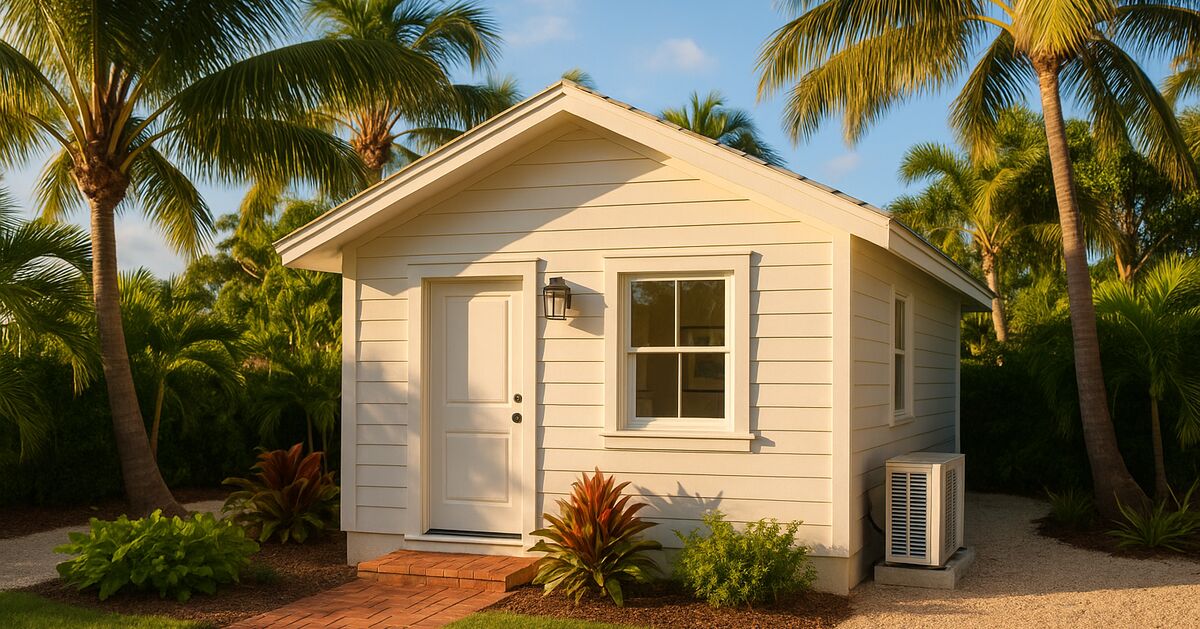
A detached casita on Anna Maria Island is one of the most coveted spaces on the Gulf Coast, and one of the most frustrating to cool. The little cottage sits 30, 50, sometimes 80 feet from the main house, separated by a landscaped path, a pool deck, or a stretch of sand-kissed grass. The mini-split itself is almost never the hard part. The hard part is getting adequate electrical power to the unit without spending more on the trench than on the equipment.
This post walks through exactly that problem: the electrical realities, the options available to you, the trade-offs, and how to sequence the whole project so you do not end up making an expensive decision you cannot undo.
Why detached structures on Anna Maria Island have an electrical problem in the first place
Anna Maria Island properties are often older, built in an era when a guest cottage or in-law suite was treated as a storage shed with a bed in it. The electrical subpanel in the casita, if there is one at all, may be a tiny 60-amp feed running off the main house panel through an undersized wire buried in a shallow trench. Or there may be no dedicated feed at all, just a long extension of a 15-amp circuit that powers a single overhead light and a couple of receptacles.
A mini-split for a space in the 300 to 600 square foot range typically needs a dedicated 230-volt circuit. Depending on the unit's rated amperage (commonly 15, 20, or 25 amps for a single-zone unit in that size range), the wire gauge, breaker, and disconnect box must all be sized to match. If the existing subpanel in the casita cannot support that load, or if the wire run from the main panel is too long and undersized to avoid voltage drop, you have a real electrical project on your hands before the HVAC work even starts.
Island soil conditions add another layer of complexity. The sandy, shell-mixed soil common across Anna Maria Island drains beautifully but shifts. Conduit buried in that material can move over time. And because the Island sits in a flood zone, local inspectors pay close attention to how underground conduit is routed and at what depth. This is not a place where you improvise.
What "running new electrical" actually involves
When a homeowner says "I need to run new electrical to my casita," that phrase covers a wide range of scope and cost. Here is what is typically involved:
- Panel evaluation at the main house. Does your main panel have an open breaker slot with enough headroom to add a 240-volt double-pole breaker? If the panel is already full or is a brand with a known safety history that pushes inspectors to require replacement, the electrical work starts there.
- Wire sizing for the run. Voltage drop is real over long runs. A 12-gauge wire is fine for 20 amps over 30 feet, but over 60 or 80 feet you may need to step up to 10-gauge or even 8-gauge wire to keep voltage drop within acceptable limits. Undersized wire over a long run means the mini-split works harder, runs hotter, and ages faster.
- Underground conduit installation. On Anna Maria Island, most utilities require conduit (not direct-burial cable alone) for runs to separate structures. That means trenching, laying conduit, pulling wire, and backfilling. Depending on what is in the ground already (irrigation lines, older electrical, septic laterals), this can become a careful hand-dig job.
- A subpanel or disconnect at the casita. The mini-split requires a dedicated circuit with a disconnect within sight of the outdoor unit. If the casita has no subpanel, you may need one, or at minimum a properly rated disconnect box.
- Permits and inspection. Manatee County (which governs Anna Maria Island) requires permits for new electrical service to a separate structure. This is not optional, and skipping it creates problems at resale and with insurance. Plan for it.
The three paths forward and their real trade-offs
Once you understand what "running new electrical" involves, you have three realistic paths. None of them is universally right. The best choice depends on the distance from your main panel, your existing infrastructure, and how you use the casita.
Path 1: Run a proper dedicated circuit from the main panel
This is the straightforward answer, and for most casitas it is the right long-term solution. You pay for the electrical work once, you get a properly sized, permitted, inspected circuit, and the mini-split runs at peak efficiency for its entire service life. There are no workarounds to maintain and no compromises in comfort.
The cost of this path varies considerably depending on the run length, soil conditions, and whether the main panel needs any work. Get a licensed electrician to scope it before you assume it is unaffordable. Some homeowners are surprised to find the trench is shorter than they imagined because the conduit can be routed along a fence line or under a shallow paver section rather than across open lawn.
If you are going this route, coordinate with your HVAC contractor early. The electrician needs to know exactly where the outdoor condenser unit will sit and where the disconnect needs to be located. A few hours of coordination up front prevents a disconnect box ending up in the wrong spot. Our post on multi-zone refrigerant line routing decisions you can't undo after walls close makes a similar point about sequencing decisions in the right order.
Path 2: Upgrade what is already there
If there is already a buried conduit run between the main house and the casita but it is undersized or carrying the wrong wire, sometimes the conduit can be reused. An electrician will pull a fish tape through to check whether the conduit is clear, what gauge wire is already inside, and whether the conduit diameter will accommodate new, heavier wire. If the conduit is clear and large enough, you may be able to pull new wire through the existing pipe, which saves the cost of trenching entirely.
This is worth investigating before you assume a full trench is required. On older Anna Maria Island properties where the original electrician did use conduit (not just direct-burial cable), this option comes up more often than you might expect.
Path 3: Use a low-voltage or high-efficiency mini-split system designed for limited power availability
This path gets discussed more than it should, and deserves an honest look. There are mini-split systems marketed as "low-voltage" or "120-volt" systems that run on a standard household circuit. They exist, they work, and they are appropriate in certain situations. But they come with real limitations:
- Cooling capacity is genuinely lower. A 120-volt mini-split in the 6,000 to 9,000 BTU range may be adequate for a 200 square foot casita with modest sun exposure, but it will struggle in a 500 square foot space with west-facing windows on an August afternoon on Anna Maria Island.
- They still need a dedicated 120-volt circuit. You cannot simply plug them into a shared outlet. If the existing circuit in the casita is already shared with lighting and receptacles, you may still need electrical work.
- They are not a long-term substitute for proper power in a space that will be used regularly by guests or family members who expect real comfort.
For a casita that is truly small and used only occasionally, a 120-volt unit on a dedicated circuit can be a reasonable bridge. For anything else, it is better to invest in the electrical work and do it right.
Sizing the mini-split correctly for an island casita
Before any electrical work begins, know what size unit you actually need. A casita on Anna Maria Island has specific load characteristics that differ from a similar-sized room inside an air-conditioned main house:
- All four walls and the ceiling are exposed to outdoor conditions. There is no shared interior wall with a conditioned space to buffer the heat load.
- West and south exposures are brutal in the afternoon. If your casita has large windows or glass doors facing west, add meaningful cooling load for afternoon sun.
- Humidity matters as much as temperature. The island's proximity to the water means elevated outdoor humidity nearly year-round. A properly sized mini-split that runs in longer cycles will dehumidify more effectively than an oversized unit that short-cycles. Our services page covers how we approach load calculations for exactly these kinds of spaces.
- Occupancy load. If the casita is used as a full-time in-law suite with people cooking, showering, and sleeping there, the load calculation should reflect that. If it is an occasional guest space, the numbers look different.
Do not let a well-meaning salesperson install the biggest unit that fits on the circuit just to be "safe." Oversizing is a real problem in humid coastal climates.
What permits look like for this project on Anna Maria Island
Anna Maria Island sits within Manatee County jurisdiction, and the county requires permits for both the electrical work and the mini-split installation when they involve a separate structure. The permitting process is not adversarial, but it does take time, and it requires a licensed contractor pulling the permit. Trying to shortcut this on an island property is a poor idea: flood zone requirements, HOA rules (where they exist), and insurance underwriters all have reason to ask questions about unpermitted work, and they will ask those questions at the worst possible moment, usually during a claim or a sale.
A reputable HVAC contractor will pull the mechanical permit for the mini-split. The electrician pulls the electrical permit. Both inspections need to pass before the work is considered complete. Build this into your timeline, especially if you are hoping to have the casita ready before the winter rental or snowbird season.
How to sequence the project so nothing has to be redone
Here is the order of operations that prevents wasted money and rework:
- Start with a site visit from your HVAC contractor. They assess the space, measure, and determine the right BTU capacity. They also identify where the outdoor unit should go and where refrigerant lines will run.
- Share that information with your electrician. The electrician now knows what amperage the circuit needs to carry, where the disconnect should be located, and whether the existing panel and any existing conduit can support the project.
- Get the permits pulled before any work begins. This protects everyone.
- Do the electrical work first. The dedicated circuit, subpanel or disconnect, and any panel upgrades happen before the mini-split equipment arrives.
- Install the mini-split once power is confirmed available and inspected. Refrigerant lines are run, the indoor unit is mounted, and the system is commissioned and tested.
- Final inspections close out both permits.
This sequence avoids the scenario where the mini-split is installed but cannot be powered up because the electrical work is incomplete, which is surprisingly common when homeowners try to coordinate two separate contractors without a clear plan.
A note about salt air and equipment placement
Anna Maria Island's air is beautiful and corrosive in equal measure. Salt air accelerates corrosion on electrical connections, refrigerant line sets, and the condenser unit cabinet. A few things worth doing:
- Specify a mini-split model with a coated or blue-fin condenser coil. Several major brands offer this specifically for coastal applications.
- Position the outdoor unit so it is not in the direct path of prevailing onshore wind if possible, even if that means a slightly longer line set.
- Plan for annual maintenance. Coil cleaning, connection inspection, and drain line flushing matter more on the island than they do five miles inland.
Our ductless mini-split installation and service for Anna Maria Island neighbors in the Venice area and across the broader Sarasota region follows the same coastal-first thinking for every property we work on.
What homeowners on the Island tell us after the project is done
The consistent feedback from Anna Maria Island casita owners after a proper mini-split installation is that they wish they had done it sooner, and they are glad they did not cut corners on the electrical work. A casita that is genuinely comfortable extends the usable season for guests and family, protects against humidity damage to furniture and finishes, and adds real value to the property.
For anyone starting to think through this project, the best first step is a conversation. You can reach our team through the contact page, and we are happy to walk through the electrical and mechanical realities of your specific property before you commit to anything. We serve Anna Maria Island along with Bradenton, Lakewood Ranch, Osprey, and the full list of communities on our locations page.
The island is worth the extra planning. Do it right and the casita becomes the most comfortable spot on the property.