Adding a mini-split to a sunroom or addition without overloading your panel
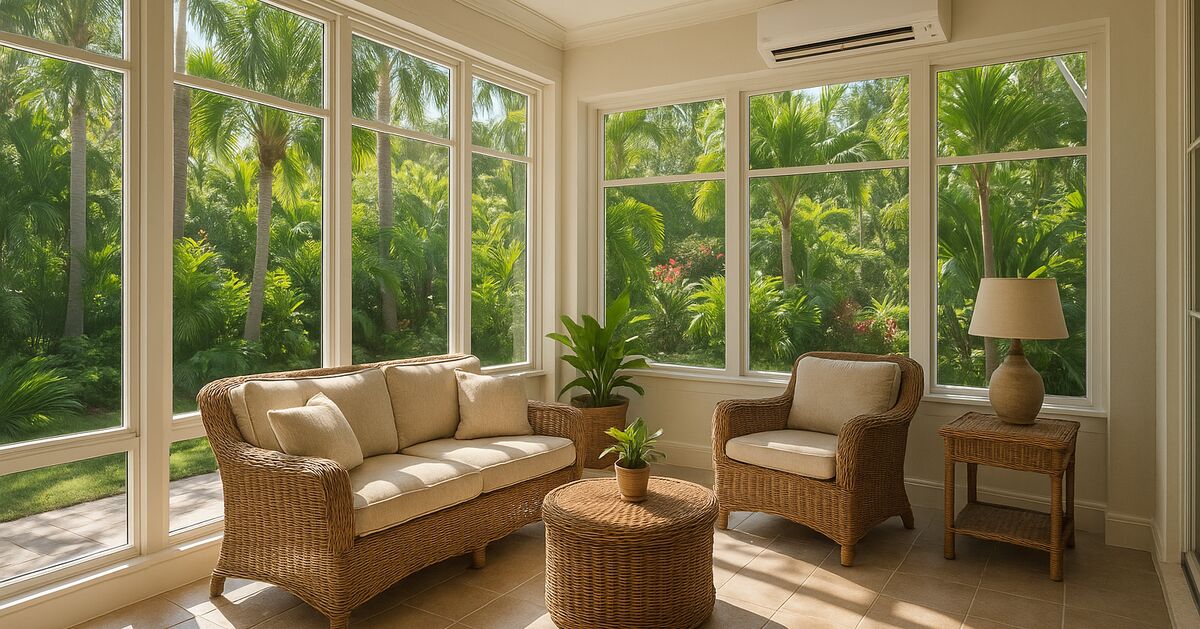
Your sunroom is finally finished, your new home addition is framed and drywalled, and now the Florida heat is making it perfectly clear: you need cooling in there, fast. A ductless mini-split is almost always the right answer for a space like this. But the question that catches homeowners off guard is not which unit to buy or where to mount the indoor head. It's what that new circuit is going to do to your electrical panel.
Getting this part wrong can mean tripped breakers, failed inspections, a voided equipment warranty, or in the worst case, a house fire. Getting it right means years of quiet, efficient comfort in your new space. This guide walks you through exactly what to think about, what to ask your electrician, and what a licensed mini-split installer will check before any equipment goes on the wall.
Why mini-splits and home additions are such a natural pair
Before getting into the electrical side, it's worth understanding why ductless systems are the go-to choice for additions and sunrooms in this area. If you've already read about how ductless mini-splits work without ducts, you know the basic idea: the indoor air handler mounts on the wall, a small refrigerant line runs through a hole in the exterior wall to the outdoor compressor, and there are no duct runs to engineer or install.
For a sunroom in Bayshore Gardens or a bonus room addition in Lakewood Ranch, this matters a lot. You are not punching into your existing duct system, not trying to balance airflow across a new zone, and not hoping your existing air handler has spare capacity. The mini-split is its own self-contained system, sized for exactly the space you are conditioning.
The tradeoff is that it runs on electricity, and it needs a dedicated circuit. That is where the panel conversation has to happen.
Start here: understand what your panel actually has available
Most homes in Sarasota, Bradenton, Venice, and the surrounding area were built with 150-amp or 200-amp service panels. Older homes, particularly those on Anna Maria Island, Casey Key, and parts of Downtown Sarasota, sometimes still have 100-amp service, which is a different conversation entirely.
A standard residential mini-split for a sunroom or single-room addition typically requires a 240-volt dedicated circuit with a breaker sized between 15 and 30 amps, depending on the unit's capacity. A small 9,000 BTU system might only need a 15-amp breaker. A larger 24,000 BTU unit could need a 30-amp breaker. The equipment's installation manual and the nameplate data will tell you exactly what's required, and your installer is required to follow those specs.
The first question is simple: does your panel have an open slot for that breaker? Many panels that have been in service for 20 or 30 years are already full. Homeowners often don't realize this until an electrician opens the cover and finds every slot occupied, sometimes with tandem breakers crammed in to squeeze in extra circuits.
An open slot alone doesn't guarantee you can add the circuit safely. You also have to look at the total load the panel is already handling relative to its rated capacity. This is called a load calculation, and it is not something to skip.
What a load calculation actually tells you
A load calculation is a formal accounting of every electrical load in your home: the HVAC system, the water heater, the dryer, the range, the refrigerator, lighting, outlets, and everything else. It produces a number expressed in amps, and that number is compared against what your panel is rated to handle continuously.
National Electrical Code (NEC) guidelines, which Florida has adopted, require that your total calculated load not exceed the panel's rated capacity. If your 200-amp panel is already carrying a calculated load of 185 amps and you want to add a new 30-amp mini-split circuit, you have a problem that no amount of wiring creativity will fix without an upgrade.
A qualified electrician performs this calculation. It typically takes less than an hour, and many HVAC installers who handle their own electrical work will do it as part of the project assessment. If your installer does not bring it up, ask about it directly.
The three outcomes of the load calculation
Once the numbers are in, you are looking at one of three situations:
- Plenty of capacity available. The panel has open space, the load calculation shows comfortable headroom, and your electrician can pull a dedicated circuit permit and get the work done in a day. This is the most common result in newer homes in Lakewood Ranch, Nokomis, and Osprey where 200-amp service was installed as standard.
- Tight but workable. The panel has a slot and the load math works, but just barely. A good electrician will note this and may recommend against adding additional large loads in the future without a panel review. The mini-split install can proceed, but you want this documented.
- Panel upgrade required. The panel is full, the capacity is maxed out, or both. You will need a service upgrade (often called a panel upgrade or meter base upgrade) before the mini-split circuit can be added. In Florida, this involves your local utility company and the permitting process, so plan for extra time and cost.
None of these outcomes should come as a surprise if you've had the load calculation done upfront. Problems arise when homeowners or contractors skip this step and assume it will be fine.
Permits: not optional, and here's why that matters
Sarasota County, Manatee County, and the municipalities within them all require permits for new electrical circuits and for mini-split installations. If you are adding a circuit for a mini-split in a new sunroom or addition, you are almost certainly working in a space that already has its own building permit. The electrical work for your mini-split circuit needs to be included in or added to that permit scope.
Inspectors will check the breaker sizing, the wire gauge, the disconnect box (required within sight of the outdoor unit), and the installation of the equipment itself. If the work is done without permits and something goes wrong later, your homeowner's insurance can deny a claim. If you try to sell your home, unpermitted work in an addition is a serious problem that can derail a closing.
Reputable installers handle permitting as a routine part of the job. If someone offers to skip permits to save you money or time, that is a reason to use a different company.
Choosing the right size unit for the space
Electrical capacity and equipment sizing are related. A larger unit draws more power and needs a bigger circuit, but a larger unit is not always the right answer. Oversizing a mini-split in a Florida sunroom is a real and common mistake. The unit short-cycles (turns on and off rapidly), never runs long enough to pull humidity out of the air properly, and you end up with a space that feels clammy even when the temperature reads correctly.
Proper sizing starts with a Manual J load calculation for the room itself, which is separate from the panel load calculation mentioned above. For a sunroom, the calculation accounts for the large glass area (which generates significant solar heat gain), the ceiling height, the insulation in the walls and roof, and how much of the day the sun hits those windows.
A sunroom facing west in Sarasota gets brutally hot in the afternoon and may need more cooling capacity than its square footage alone would suggest. A well-insulated addition on the shady north side of a home in Venice might size smaller. The math matters more than the rules of thumb.
Our ductless mini-split installation and service page has more detail on how we approach sizing for different types of spaces, including additions and sunrooms.
What to expect on installation day in the addition
Once permits are in order and equipment is selected, the actual installation in a sunroom or addition is typically straightforward. The indoor head mounts on an exterior-facing wall (if the room has one) or sometimes on an interior wall with a longer line set run to the outside. The installer cores a hole through the wall for the refrigerant lines, condensate drain, and communication wiring, then runs all of that to the outdoor unit location.
The electrical work involves running the dedicated circuit from the panel to a disconnect box near the outdoor unit and then to the unit itself. This part of the job requires a licensed electrician in Florida, whether that is a separate trade contractor or an HVAC installer who holds an electrical license.
The whole job, assuming no surprises, usually takes four to eight hours for a single-zone installation. For more detail on what the day looks like from start to finish, check out our guide on choosing the best location for your mini-split indoor unit, which covers placement decisions that affect both comfort and installation complexity.
Older homes: a specific word of caution
If your home was built before 1990, especially in neighborhoods like Downtown Sarasota, parts of Bradenton near the bayfront, or older sections of Venice near Downtown Venice, there are a few additional things your electrician should check:
- Aluminum wiring. Some homes from the 1960s and 1970s were wired with aluminum instead of copper. Aluminum wiring requires special connectors and anti-oxidant compounds at all connections. It is not a dealbreaker, but it must be handled correctly.
- Federal Pacific or Zinsco panels. These brands, common in older Florida homes, are known for breakers that fail to trip under overload conditions. If your home has one of these panels, an upgrade is strongly recommended regardless of whether you are adding a mini-split.
- Undersized service. A 100-amp main service was adequate for a 1965 home with no central air, a small water heater, and modest appliances. It is often not adequate for today's loads, and adding any significant new circuit requires the upgrade conversation.
None of this should discourage you from the project. Homes across all these communities successfully get mini-splits added every year, sometimes with panel upgrades and sometimes without. Knowing what you are dealing with before work starts is simply how you avoid expensive surprises.
How to find the right team for this project
A project that touches both HVAC and electrical work needs a contractor who either holds licenses in both trades or has a trusted subcontractor relationship with a licensed electrician. In Florida, mini-split installation requires a certified HVAC contractor, and new electrical circuits require a licensed electrical contractor. These are not the same license.
When you are getting quotes, ask each company directly:
- Who will pull the electrical permit?
- Do you do a load calculation as part of the assessment?
- Are you licensed for both HVAC and electrical work, or do you sub out the electrical?
- What happens if the panel doesn't have capacity?
A contractor who gives you straight, confident answers to these questions is almost certainly one who does this work properly. One who hedges or suggests skipping permits is not.
We serve homeowners across Sarasota, Bradenton, Venice, Lakewood Ranch, Osprey, Nokomis, and all surrounding communities. If you are planning a sunroom or addition project and want to talk through the electrical and sizing questions before you commit to equipment, our contact page is the easiest place to start that conversation. We would rather help you plan this correctly from the beginning than sort out problems after the fact.
The short version
Adding a mini-split to a sunroom or home addition is one of the smartest moves you can make for comfort and efficiency in Florida's climate. The system will work quietly and efficiently for years when it is installed correctly. That means:
- A load calculation to confirm your panel has capacity for the new circuit.
- Proper sizing of the unit for the actual heat load in the space, not just the square footage.
- Permits pulled and inspections completed, every time.
- Licensed contractors handling both the HVAC and electrical scopes.
Skip any one of those steps and you are accepting risk that simply is not necessary. Do them all and your new space will be genuinely comfortable from the first day of summer.